Season 3 - Episode 4
Chronic Migraine Through My Sister’s Eyes: a Conversation with Meghan McInerny
We all carry more than we show—juggling roles, responsibilities... Read More
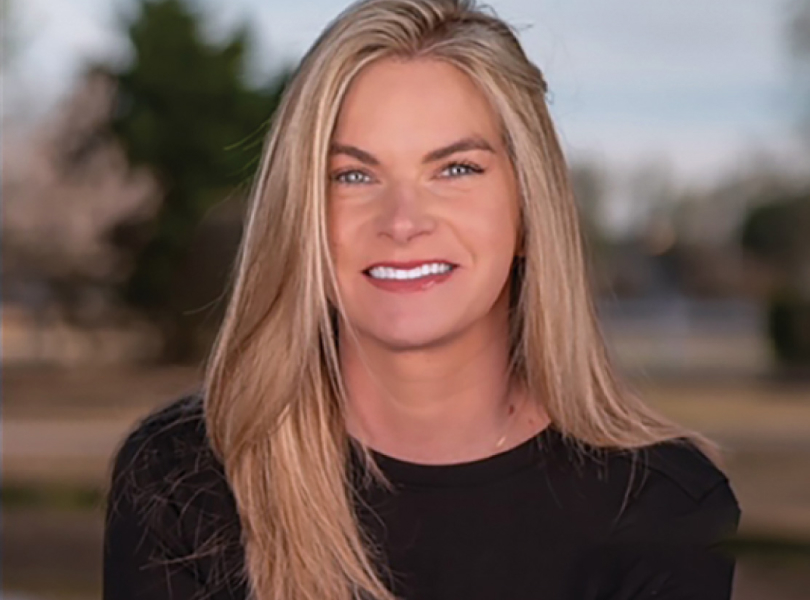
We all carry more than we show—juggling roles, responsibilities, and realities that often go unseen, even by those closest to us. In this episode, Nora sits down with her big sister, Meghan, for an honest and vulnerable conversation about the reality of living with Chronic Migraine—a reality woven into their family history. Together, they reflect on how this shared thread has shaped their relationships with each other and with their father. Meghan shares how her symptoms have shifted over time, and the quiet resilience it takes to adapt, especially when those around her may not fully see or understand what she’s navigating.
Please see Important Safety Information, including Boxed Warning, within this episode and .
Life sometimes has a way of blindsiding you with a feeling of being overwhelmed at the worst possible time. That's why you have your self-care, your coping strategies. That's why you have us.
I'm Nora McInerny and this is The Head Start: Embracing the Journey, a podcast where we'll be taking all those things you usually save for your friend group out into the open so we can all find a bit of optimism.
For those battling Chronic Migraine, these conversations are going to be even more helpful and relatable, so definitely stick around.
This show is brought to you in partnership with AbbVie. So first, let's hear some important safety information and stay tuned to the end of the podcast for more.
Speaker 1:
Indication: BOTOX® (onabotulinumtoxinA) is a prescription medicine that is injected into muscles and used to prevent headaches in adults with Chronic Migraine who have 15 or more days each month with headache lasting 4 or more hours each day in people 18 years and older.
It is not known whether BOTOX is safe and effective to prevent headaches in patients with migraine who have 14 or fewer headache days each month (episodic migraine).
Important Safety Information: BOTOX may cause serious side effects that can be life threatening. Get medical help right away if you have any of these problems any time (hours to weeks) after injection of BOTOX:
- Problems swallowing, speaking, or breathing, due to weakening of associated muscles, can be severe and result in loss of life. You are at the highest risk if these problems are preexisting before injection. Swallowing problems may last for several months.
- Spread of toxin effects. The effect of botulinum toxin may affect areas away from the injection site and cause serious symptoms, including loss of strength and all-over muscle weakness; double vision; blurred vision; drooping eyelids; hoarseness or change or loss of voice; trouble saying words clearly; loss of bladder control; trouble breathing; and trouble swallowing.
Please stay tuned for additional Important Safety Information within this podcast.
Today's guest, Meghan McInerny, is not a BOTOX® patient. Meghan was not compensated by AbbVie for sharing her story. Portions of this podcast are sponsored by AbbVie.
Nora McInerny:
Hi everyone, welcome back. Today is actually the final episode of the season. That went very quickly. I know that a lot of our audience are people who are a part of the Chronic Migraine community and I know that another part of this community are people who love those that they know in their life who are living with migraine, who want to show up for them, understand them and support them. It's hard to have a chronic illness and it's hard to watch someone you love struggle with one. In season one, I talked a little bit about my father's migraine attacks when I was growing up, how they seemed to come out of nowhere and cast a whole cloud on the house. What I didn't mention was that my big sister, Meghan, has had very similar experiences. All the stories I've heard and conversations I've had in this show have given me a new understanding of what each of them go through.
Meghan is eight years older than me, which growing up might as well have been 30 years. This was the '80s and the '90s where a person eight years older than you could be your full-time caregiver. The '80s were a wild time. I saw Meghan as an adult. I saw her as a second mom. I was obsessed with Meghan. I loved going through her things when she wasn't home. I loved sitting on her bed and watching her tease her bangs and spray a cloud of hair spray around her head. I loved everything she wore and everything she did. And in a lot of ways, I am just a copy of Meghan. Anything I have done, Meghan did first, including podcasting, writing a book, having kids. She is still the person I look up to the most, even though I am, I believe, five inches taller than her.
And while Meghan and I both inherited our father's nose only she got his nice thick hair and his not-as-nice migraine attacks. If seeing my dad struggling was scary, seeing my sister struggling has always broken my heart. I've always wanted a way to just wave a wand and make it better, to be able to reach into her head and pull out whatever is hurting her. But instead, we just have to settle for love, compassion and a conversation on a public podcast. So here it is, a conversation with me and my big sister, Meghan McInerny. And yes, we know that we sound alike. Yes, we know that our laughs are quite loud. You will hear my Minnesota accent activate the longer we talk. I simply cannot help it.
Before we meet Meghan, I'm going to check in with Dr. Rhyne. Hi Dr. Rhyne.
Dr. Rhyne:
What's up Nora?
Nora McInerny:
Are you ready to talk about my sister?
Dr. Rhyne:
I sure am. So the story that I hear is that you guys have really similar energy.
Nora McInerny:
Yeah, we do.
Dr. Rhyne:
But you're the wild hippie and she's the more buttoned up.
Nora McInerny:
She's always had it together and she also has Chronic Migraine.
Dr. Rhyne:
So there's this quiet hope that anytime that we have somebody that you know who's dealing with Chronic Migraine that the stuff we talk about here gets to them specifically.
Nora McInerny:
Yes.
Dr. Rhyne:
You know what I mean?
Nora McInerny:
Yes.
Dr. Rhyne:
So the way that I'm going to see our conversation today is really, it's just trying to help out your sister.
Nora McInerny:
I really love that.
Okay guys. Today is extra special and will be extra fun because today we are talking with one of my favorite people who is extra special and extra fun, my big sister, Meghan. Meghan, to kick things off, who is your favorite sister?
Meghan McInerny:
I haven't thought about this question. Can I get back to you?
Nora McInerny:
Fair.
Meghan McInerny:
Oh, wait, you're my only sister.
Nora McInerny:
Yes.
Meghan McInerny:
That puts you in the coveted number one position.
Nora McInerny:
Forever number one spot. And I will take it because, as you know, I've won very few awards and the ones that I kept, I've been told are not awards, including most improved for nearly every sport.
Meghan McInerny:
Oh, that's just such a pity award.
Nora McInerny:
They were like, "You're still here and that-
Meghan McInerny:
Thanks for showing up.
Nora McInerny:
Hey, hey, you're here. You're not good but you haven't gotten worse. Okay, Meghan, I have told listeners about dad's migraine attacks. I remember him going into our parents' room with a cold washcloth on his eyes and how he'd lay on top of his covers-
Meghan McInerny:
Like a corpse?
Nora McInerny:
Yeah. Like a vampire just with his-
Meghan McInerny:
Like a vampire.
Nora McInerny:
Arms crossed-
Meghan McInerny:
Arms crossed. Fully clothed.
Nora McInerny:
Fully clothed, above the covers. And then he would yell at us for talking or laughing-
Meghan McInerny:
Breathing.
Nora McInerny:
Bless him. And I have witnessed your migraine attacks, but we've never really talked about them and I thought it would be the best if we did this on a podcast for thousands of people. So, thanks for being here.
Meghan McInerny:
I couldn't agree more. I did think about that when I was getting ready for this conversation. Like, you and I, you know I have them, but I don't think we've ever talked about them.
Nora McInerny:
So all of these questions are questions that I do not know the answer to, including when did this start? What were your migraine attacks like? How would you describe them to someone who didn't experience them like your favorite sister?
Meghan McInerny:
Yes, the first one that I clearly remember getting was when we lived in La Crescent and I was at our neighbor's house, and I remember this distinctly because I started to get what now I know is an aura, but at the time I didn't know what it was. I just knew that something was really wrong. And so I went home, and then all of a sudden, this intense discomfort. And I was very sensitive to light, I got very sick, so I remember going into my room, laying down and just crying, just wanting whatever was happening to be over.
Nora McInerny:
I wonder if because dad had migraine attacks, do you think he kind of understood the seriousness of what you were experiencing?
Meghan McInerny:
Yeah. And he was the person who really started to recognize what they were. It's extremely difficult to understand if you've never experienced one. So I think it was helpful that dad had them and could recognize what they were and they could get me some help.
Nora McInerny:
Did you see a neurologist or what kind of help did they get you?
Meghan McInerny:
I think initially I went to just our regular doctor and then I was pretty quickly referred to a neurologist. And I tried a lot of different medications, most of which I would take at the onset of the migraine attack. At that time, there wasn't much that I could take that was trying to prevent them. Now there's a lot more options for preventing. At that time, it was like, "Listen, if one hits you, these are the ways that we can help you with the discomfort, the nausea, whatever it is that you're experiencing."
Nora McInerny:
What do you think triggered those earlier migraine attacks and have your triggers changed over time?
Meghan McInerny:
No, I don't know what started them. I've never known what has caused them. For me, it's a lot of different things. I do know, if I don't get enough sleep, I'm more likely to get one. Doesn't mean I'm always going to get one if I didn't get enough sleep. If I haven't eaten in a long time, if I am dehydrated, if the weather changes quickly. So in the summertime, if a thunderstorm comes in really fast, much more likely to get a migraine attack. So over time, I've developed this mental encyclopedia of, "These are the things that put me on alert that I might be in kind of in the danger zone." And I've started to notice signs inside of my body that tell me like, "Ooh, I think I'm in the zone where I could possibly get one."
Nora McInerny:
How long were you experiencing migraine attacks before you got an official diagnosis of Chronic Migraine?
Meghan McInerny:
I would say probably five years. It's difficult too because they are so, they can be so unpredictable. So even thinking about something like Chronic Migraine, which is a certain number of headache days you have within a certain time window, you can go through periods of time where you're getting them quite frequently and frequently enough that it is really disrupting your work life, your personal life, your social life. It's really, when I think about the things that I've missed because I just couldn't do it, I physically couldn't do it, it makes me really sad. So I'm 50 now. I've also heard that during menopause, Chronic Migraine can get worse or get better. It just feels like such a... It's kind of a crap shoot like what's going to happen.
Nora McInerny:
I want to bring you back into the conversation here Dr. Rhyne. So we're talking today about the same thing we always talk about, but today it's different because we're also talking about my sister and I think pretty much every guest that we've had on this show says that they wish that they had found a headache specialist sooner. My sister considers herself lucky because my dad had migraine attacks and he recognized in her what was happening and got her help pretty quickly, all things considered. But I, I want to talk more about sort of that gap between the experience that people are having with migraine attacks or Chronic Migraine and how long it takes them to find or even reach out to a headache specialist.
Dr. Rhyne:
Yeah, this is, for sure, one of the most common responses that we see from patients that they wish they'd found somebody sooner. So there's a recent study that shows only 5% of people living with Chronic Migraine actually find preventative and acute treatments after going through the process of talking to doctors, getting the diagnosis, and trying various different types of treatment options. This is unacceptable. There's another one that I like. National Headache Foundation did a survey on migraine. It was called Preventing Migraine Attacks: A Current Perspective, and they found that, in treating their disease overall, about 62% of those respondents that wrote back wish that they had seen a headache provider sooner. This is something that I literally hear every single day.
Nora McInerny:
Yeah, you have to imagine that a delay in finding care, seeking care is going to have a pretty big effect on someone's treatment journey.
Dr. Rhyne:
It does. It definitely has an impact on their journey. Another study on migraine disease that in general shows that it takes five years before patients can get the diagnosis and move towards that treatment therapy. And so, we need to get started as quick as we can and that's really the big takeaway when we think about diagnosis.
Nora McInerny:
All right, thanks Dr. Rhyne. After the break we'll get back to the conversation with Meghan McInerny.
Speaker 5:
The BOTOX® Chronic Migraine branded mid-roll spot will play here.
Nora McInerny:
Meghan You mentioned missing out on things or it being disruptive to your life, your work life, your personal life. What are some of the ways that Chronic Migraine has disrupted your life?
Meghan McInerny:
Last year, I was supposed to go to this three-day work conference and it was my first year in this new role, and I was trying to make a good impression, and I was there the first day and then the next two days I was out with a migraine attack. And I just felt so embarrassed because it was people that didn't know me that well yet, people that I didn't feel like I had that history of trust and like, "Oh, that’s, Meghan is super reliable. Don't worry about it." I don't know if other people you've talked to have also expressed this, but it is not just physical discomfort. For me, it creates a lot of intense emotional discomfort. And I don't know if it's because it makes me feel so vulnerable to just feel so knocked down by something. When I am experiencing a migraine attack, I am very tender emotionally and very, yeah I'll cry about anything. I just feel so bad. My feelings hurt. My head hurts.
Nora McInerny:
Yes. And no one wants to feel bad. The work trip is important to you because your work is important to you. Work is a core part of everybody's identity. You just don't want to feel like you're not yourself. And it's hard to feel like yourself when you don't physically feel like yourself. I hate this for you.
Meghan McInerny:
Yeah, and there were years where I was a single parent where the kids just had to get used to the fact that if I said the word "migraine", they were like, "Okay, all hands on deck. Dinner's on us tonight, we'll figure it out." They just knew that I couldn't function.
Nora McInerny:
You wear a lot of hats. You are a mom, a friend, a wife, a hell of a professional, you are literally everything to everyone. It is hard to feel like you cannot fill everybody's needs all the time and also somehow find the time to take care of yourself. Even without Chronic Migraine or a migraine attack, that is just a lot to balance. That is a lot to juggle. How has Chronic Migraine made all of that harder?
Meghan McInerny:
It basically just takes you out of your life for some period of time that is unknown to you. So I could say, "Okay, having a migraine attack today, so I'll catch you tomorrow." And that may or may not be true. I may not be catching you for another four days. Like, I really have no idea. So it just, it just throws a wrench in whatever it is that you're doing, whether it is personal, work, vacation, doesn't matter. Can I tell you one other thing I just remembered?
Nora McInerny:
Yeah.
Meghan McInerny:
So when I got married three years ago, the very first time I went to visit my in-laws for Thanksgiving, it was the first time I was meeting a lot of them, the minute I walked in their door, I got a migraine attack. So I am in a guest room of a house I've never been in before in a state I've never been in before during a holiday where the whole point is everyone is trying to be around each other and everyone's excited to meet me because I'm this new member of the family. And I ended up yeah, just stuck in this guest room for 18 hours, and then finally my husband had to take me to the ER. And so again, it's, do I believe that they understood and felt very empathetic toward me? Yes. Did I feel weird? And again, it's so hard to explain because a lot of people are like, "Oh yeah, you have a headache. I've had those." I'm like, "Well..."
Nora McInerny:
Ah, yeah, yeah.
Meghan McInerny:
It's not exactly what you're thinking.
Nora McInerny:
It's not like that. Which also, and then you're in a new place that you've never been, and Thanksgiving is the time of noises and smells.
Meghan McInerny:
Yes. Yes.
Nora McInerny:
I'm going to check in with Dr. Rhyne.
Dr. Rhyne, I am bringing you back in to dive into something we've actually never covered. Hormones and migraine, how they may affect each other? Before getting into some of the menopause specifics that Meghan started talking about, how do hormones and migraine affect each other on a higher level?
Dr. Rhyne:
This is really, I think, critical to understand, and I think your sister really illustrates this so well. There is an overall link between hormones and migraine. So when women, in particular, go through big changes in hormones during the menstrual cycle, pregnancy, breastfeeding, menopause, it can change their migraine symptoms, it can change their triggers and the severity. This is something that I try to really closely monitor with my patients so that we can adjust our approach as we go.
Nora McInerny:
And then there's perimenopause and menopause specifically. How are those a factor in how you approach management for patients who are at those stages in life?
Dr. Rhyne:
This is super important, and along with their changing hormone levels, perimenopause and menopause can also set off other triggers. For example, like getting a good night's sleep, for many people living with Chronic Migraine is super important. Being well rested helps them be at their best each day. But with hot flashes, night sweats, the insomnia that can sometimes come along with perimenopause, it can be a lot more difficult for them to get their full eight hours. So the baseline from which they're operating on on a daily basis is not as high. They can also deal with things like irritability. It can create an environment where migraine attacks are just more easily triggered in that perimenopausal, menopausal place.
Nora McInerny:
The fun never stops.
Dr. Rhyne:
Right, this is super important. I think that when patients want to talk about the experience that they're having with Chronic Migraine, if your particular hormonal situation, it's really important if you're breastfeeding, if you're pursuing pregnancy, if you are pregnant, if you are dealing with perimenopausal symptoms or menopause, talk to your provider about that piece of the picture too, and we can tailor therapies towards what your particular experience is. And so sometimes thinking, "Well, he doesn't want to hear about my night sweats, he doesn't want to hear about my insomnia." Of course I do, and it's going to change the way that we work towards your therapy.
Nora McInerny:
Thanks Dr. Rhyne. Let's get back to my sister, Meghan McInerny.
So our dad was a source of support for you early on, which I love to hear. What is your support system like now? Who are the supportive and understanding people in your life who fully grasp what it is like for you to live with Chronic Migraine?
Meghan McInerny:
That is a good question. I do feel like I have a lot of very supportive people in my life, including you, our mom, my kids, my husband, my ex-husband. Like, I have a lot of people around me who know, who have seen what I go through, and who are very supportive of it. But almost no one else I know actually goes through it. So actually this year at work, I met a coworker, he suffers from migraine attacks and we stumbled across it almost accidentally. And so it's been great to talk to him because his are very similar to mine, and he travels a lot for work, he's got kids, he's just gone through so many of the same experiences that I have. And I think until I talked to him, I didn't really realize how much I needed that. That feeling of talking to someone and describing something and you can just see on their face, "I know exactly what you're talking about." And it just makes you feel seen and understood.
And so I have felt very supported by a lot of people, but it's really hard for a lot of people to understand. I will say that being really open about the fact that I have Chronic Migraine has opened up me getting messages from other people sometimes years later who will say, "I think I just got that thing you told me about and now I understand. It was like the worst day of my life." And while I'm sad that they experienced it, I am happy to be that person for other people who says, "Yes, I know that was a really bad day, and I'm sure your family had a hard time understanding what you were going through and why you couldn't get out of bed."
Nora McInerny:
Every time I've done an interview for this show, I really, I always think of you. I think, every time I interview somebody, that I am somehow understanding more of your experience. Do you have a message to share with listeners who are experiencing Chronic Migraine or listeners who just love someone with Chronic Migraine?
Meghan McInerny:
The first thing I would say is, I think it's really beautiful that you're listening to something that affects someone that you care about. That, in and of itself, I think is such a strong signal to the person you care about like that you want to understand their experience and what they're going through, even though you don't go through it yourselves. And the more stories you hear, the fuller picture you get. Like what you said, you can listen to my experience of Chronic Migraine, but it might be very different from someone else's. And you have to listen to a lot of different experiences to start to understand what's unique and what's common. And so I think, I think that's really important. But ultimately, I think anytime someone takes time to understand something that doesn't directly affect them, I think that's a beautiful thing. It builds empathy and connection and relationships, and that's ultimately what's going to get us all through.
Nora McInerny:
Meghan, that is beautiful. Thank you. Now let's check in with Dr. Rhyne one last time.
Yay. So this is our season finale, and I want to hand the floor over to you and ask if there is a message that you would like to leave with our Chronic Migraine community as we wrap up this season.
Dr. Rhyne:
Wow. For everybody that's listening in, man, and particularly for those folks who've gone along this ride with us as we've come through here, be an advocate for yourself is the first one. Nobody else is going to do it for you. Every study that we've talked about on here, every parent, every patient that we've talked with on here through the course of the podcast, that is the one sort of message is that they had to stand up for themselves to get what they needed. And so I really just encourage anybody to come forward, find somebody who will listen to you, and then don't stop telling them what's going on until you get what you want.
And then, there's hope. This is probably the second message is that there are people out there who know how to do this. There are people out there who know how to help you. Go find them. And that might not be easy. I wish it was. But there are wonderful, wonderful physicians, there are wonderful, wonderful advanced practice folks who can find that diagnosis and start working towards treatment. And so, stand up for yourself and find somebody who will listen to you while you're doing it. That's the message, man.
Nora McInerny:
Because you deserve that. And I feel like every time I speak to somebody on this podcast, I just cannot believe how many people go through this world with Chronic Migraine or migraine attacks or any kind of chronic illness and still do all of the life things.
Dr. Rhyne:
That's been the story, right? Hasn't it been?
Nora McInerny:
It really is. I'm just in awe of all these people who are just still going, still doing so much, still like being kind, lovely people out in the world, even while they're carrying this thing that nobody else can see. Thank you, Dr. Rhyne. It's been a real pleasure.
All right, that's my big sister. That's Meghan. Aren't you obsessed with her now? If you're a person with Chronic Migraine or any chronic illness or someone who loves someone with Chronic Migraine or chronic illness, I hope you'll have your own conversations like this. Because we do need each other, all of us. So thank you to Meghan for being here, to Dr. Rhyne, as always, and to all of you. This has been season three of The Head Start: Embracing the Journey. If you like what you heard, tell a friend, tell five friends, tell between five and 10 friends.
Thanks for listening to The Head Start: Embracing the Journey. We hope you found something worthwhile here with us today, a new coping strategy, a relatable story, the comfort of knowing you're not alone. I am so happy to be a part of creating this community for all of us, and especially for people living with Chronic Migraine.
If you haven't found a treatment plan that is working for you, please do reach out to your headache specialist to explore your options. I truly hope this has helped you find a bit of comfort and maybe a smile, maybe? See you next episode and stay tuned for more important safety information.
The Head Start: Embracing the Journey is hosted by myself, Nora McInerny, executive produced by Yvonne Sheehan. Our head of post-production is James Foster. Our researcher is Ciara Kaiser, and our writer is Jon Irwin. The show is mixed by Michael Hardman. Original music by SoundCat Productions and Artlist.