Season 3 - Episode 1
Sweat and Resilience: Balancing Chronic Migraine with Fitness Goals
The healing power of fitness goes far beyond physical... Read More
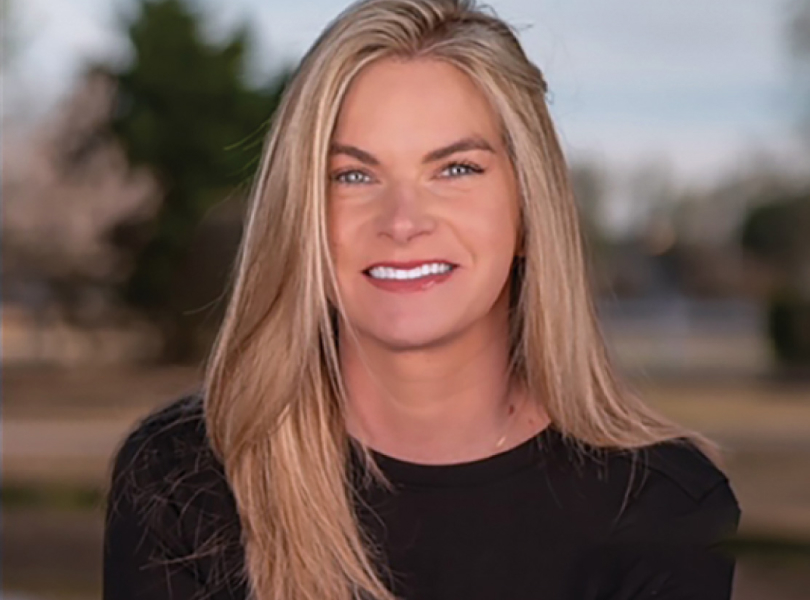
The healing power of fitness goes far beyond physical benefits—for today’s guest, it’sa form of self-expression and a celebration of what the body can do. In this episode, host Nora McInerny sits down with fitness personality Ivylis Rivera, who shares her deeply personal journey of navigating life with Chronic Migraine while holding onto her passion for movement. Ivylis opens up about the struggle of staying active while facing the fear of triggering a headache or migraine attack and the resilience it takes to keep pushing forward—a resilience that carried her through the challenging journey of finding a Chronic Migraine treatment plan that worked for her.
Please see additional Important Safety Information, including Boxed Warning, within this episode and .
Nora McInerny:
Life sometimes has a way of blindsiding you with a feeling of being overwhelmed at the worst possible time. That's why you have your self-care, your coping strategies. That's why you have us.
I'm Nora McInerny and this is The Head Start: Embracing the Journey, a podcast where we'll be taking all those things you usually save for your friend group out into the open so we can all find a bit of optimism.
For those battling Chronic Migraine, these conversations are going to be even more helpful and relatable, so definitely stick around.
This show is brought to you in partnership with AbbVie. So first, let's hear some important safety information and stay tuned to the end of the podcast for more.
Speaker 1:
Indication: BOTOX® (onabotulinumtoxinA) is a prescription medicine that is injected into muscles and used to prevent headaches in adults with Chronic Migraine who have 15 or more days each month with headache lasting 4 or more hours each day in people 18 years and older.
It is not known whether BOTOX is safe and effective to prevent headaches in patients with migraine who have 14 or fewer headache days each month (episodic migraine).
Important Safety Information: BOTOX may cause serious side effects that can be life threatening. Get medical help right away if you have any of these problems any time (hours to weeks) after injection of BOTOX:
- Problems swallowing, speaking, or breathing, due to weakening of associated muscles, can be severe and result in loss of life. You are at the highest risk if these problems are preexisting before injection. Swallowing problems may last for several months.
- Spread of toxin effects. The effect of botulinum toxin may affect areas away from the injection site and cause serious symptoms, including loss of strength and all-over muscle weakness; double vision; blurred vision; drooping eyelids; hoarseness or change or loss of voice; trouble saying words clearly; loss of bladder control; trouble breathing; and trouble swallowing.
Please stay tuned for additionl Important Safety Information within this podcast.
Today’s guest, Ivylis Rivera Salgado is an actual BOTOX® patient who was on prescribed therapy when she shared her story. Changes in therapy status may have occurred since that time. Ivylis was compensated by AbbVie for sharing her story.
Nora McInerny:
Welcome back, everyone, for season 3. Yes, I said it. Season 3, 14 episodes of great stories later. If you are new here, we have two seasons ready for you to go back and binge, but today we are talking about health, wellness, and what it means to live a soft life in a hard world.
I am, as you may know, a recovering girl boss. For many years, I thought that more was more and more was required. I had to work more, do more, be more. I had to be perfect. I treated myself like a machine that should have maximum output with minimal input. Sleep was optional. Food was an afterthought. Working out was essential, but only because I needed to be thin because thin was a form of perfection, of course. Don't worry, I am fully rolling my eyes at that now. I kept my days filled to the max with back to back to back meetings and projects. I woke up at 5:00. I went to the gym. I came home to get my kids ready for school. I worked a full day, and then opened up my laptop to keep working once they were in bed. From the outside, things looked pretty good. On the inside, they did not feel good. I did not feel good. I was scattered and stressed. I was not connected to my body or really to myself in any way.
It is hard to slow down, but if you have Chronic Migraine, you know that the body keeps the score and the body also calls the shots. It can make you slow down even if you don't want to. It took a lot of time for me to deprogram and reprogram myself, for exercise to become a part of my day that makes me feel good instead of just something I do to look good, to feed myself like I am a beloved friend because I should be a beloved friend to myself. We all should.
This is one reason why I'm so excited to share this conversation with you today, because today's guest is a star in the health and wellness space, but she's not the type to tell you that you need to rise and grind and squeeze the most out of your day. She's not here to punish you or judge you or tell you that you're doing it wrong. She is here to encourage you to live a softer life. And especially if you're living with Chronic Migraine like our guest, your body deserves every bit of extra grace and attention that you can give.
Today's guest is Ivylis Rivera Salgado, and I cannot wait for you to hear our conversation. But first, a familiar voice of the show. Guys, he's back, my good buddyand the headache specialist who has been guiding us through all of these episodes with his perspective and his advice. Dr. Christopher Rhyne, it has been a while.
Dr. Christopher Rhyne:
Hi, Nora. It is great to be back on the show. I'm excited to listen in to your conversation with Ivylis. I don't think we've talked about the important and oftentimes challenging relationship between fitness and Chronic Migraine, so I'm looking forward to this one.
Nora McInerny:
All right. Well, let's meet Ivylis.
Nora McInerny:
Ivylis, great to finally meet you.
Ivylis Rivera:
Nora, I just wanna say, like I am so happy to meet you. It's such an honor to be here, and you know, this is my first little podcast, and I can't wait to share my story and my experience with everyone.
Nora McInerny:
Me too, I have seen your recipes, the things that you make, the things that you suggest. They're not just beautiful, but really good for you. I am not a cook. I did bake bread earlier this week.
Ivylis Rivera:
Oh, so you're a chef.
Nora McInerny:
I am not the person in my family who cooks. But my husband cooks. So, what are recipes that you would suggest, things you've made recently that are easy enough for a busy person who has a wife who can't cook, and children?
Ivylis Rivera:
I'm going to go with the burger bowl. I love a good burger bowl. I love the fact that the only thing you truly have to cook is the meat. Like, I do frozen fries. I'm not doing the fries from scratch. So I just pop in some frozen fries in the air fryer, simultaneously start cooking the meat, and then you just assemble it with the lettuce and the tomato, and the onion, and there you have it. You're a chef.
Nora McInerny:
Okay. This is why you're popular, because you're making it easy.
Ivylis Rivera:
No. See, I think you know, I was born with the, "What is the quickest way possible, the easiest way possible for me to get this done?" I think it's because I have a mom who, she loves to make things from scratch. She's made everything my whole life from scratch. Prom dress. We had, we had chickens. She would make bread. I witnessedthe extra steps, and I'm like, "I'll just go to the store." So I like the shortcuts. I like to do things quick and easy.
Nora McInerny:
Okay. You say that, but you are also a person who has done so many impressive and difficult things. Like you were an athlete, you served in the military, which thank you for that. Thank you for that.
Ivylis Rivera:
Oh, thank you for your support.
Nora McInerny:
All of that is so physically demanding, so mentally demanding in so many different ways. What do you think it is about fitness, nutrition, wellness and how you talk about it that resonates with people?
Ivylis Rivera:
When I first started my journey on social media, I was just doing like little vlogs, like just silly things. But within the past couple of years, I'd started to become a little bit more open about my health journey or what I was struggling with, and that's when I found that people really started to connect with me. I was shocked because I do this thing where I think that I'm the only person in the world that is dealing with, "How do I start my fitness journey?" And then when I started to talk to the camera, talk to social media like I would talk to my diary or talk to my friend, that's when I found that people would resonate with me. I mean I got a message from somebody that said, "Hey, I followed you because you were funny. You used to post funny vlogs. But you started posting your fitness and your wellness and it motivated me to start my health journey."
Nora McInerny:
Yeah, isn't that incredible?
Ivylis Rivera:
It is.
Nora McInerny:
It's like you are in Dallas and you are a part of people's lives around the world.
Ivylis Rivera:
Yeah, it's crazy.
Nora McInerny:
Going back to your experience in the military when you're in the service, like, you are on a schedule. Somebody else is making sure you're doing everything. What made you want to share your, you know, civilian fitness journey with people, especially the part that intersects with that Chronic Migraine journey?
Ivylis Rivera:
Well, I love that question. And you know, when I was in the military, yeah, it was people controlling my schedule and you know, they're like, "You have to wake up at 5:00 AM. You're running 10 miles," or, "You wake up at 5:00 AM. You're doing pushups." I don't naturally want to do that at 5:00 AM.
So I really wanted to share my journey because most people couldn't really relate to the like being forced to work out. When I was active duty military, that's when I first started getting my migraine attacks, it made me hate fitness. Sometimes I would have to work out with a migraine. And especially with something that is an invisible disease, this is an invisible illness and so there's no physical manifestation of what's happening to me right now. So you know, people would think I was being dramatic so I would try to push through. It actually made me hate fitness at first because it, it was a trigger for me actually, like running, which was devastating for me because I used to be a huge runner. I used to run a lot. I used to love running.
Nora McInerny:
What are your Chronic Migraine triggers?
Ivylis Rivera:
Well, I have a bunch, but to name a few, for me, like my triggers would be getting really hot. So that was like working out. Most workouts, you're going to get really hot, which is why I, when I was actually active duty military, I started doing Pilates before it was cool. Before it was cool, you guys, I was doing Pilates.
Nora McInerny:
It was developed as a military exercise.
Ivylis Rivera:
Wait, was it?
Nora McInerny:
For after, after World War I for disabled veterans to like build up their core strength so they could like live independently.
Ivylis Rivera:
No. I’m about to tell everybody that.
Nora McInerny:
Yeah, it was a hospital workout.
Ivylis Rivera:
Wow, that's actually... I actually love that.
Nora McInerny:
Look it up, Joseph Pilates. He was like, "I got to do something for disabled veteransand I got to get them like feeling good and capable." And it's all about your core.
Ivylis Rivera:
Wow. And it is.
Nora McInerny:
And meanwhile, I go to Pilates and I'm, I’m a danger to myself and others at Pilates.
What does fitness and wellness do for you now with your Chronic Migraine?
Ivylis Rivera:
Yes, I love that question. I don't know how to describe it. Like, on the days where I do have a migraine attack, I will tailor my workout to be less intense. I'll do something in the AC. I won't go outside. I'll walk on the treadmill. I'll do a light walk because to me, it's not really about the intensity of the workout. It's more so keeping that consistency and making sure that I am a dependable person to myself because I've learned that you know, sticking to your goals and actually doing what you say you're going to do, it actually makes you trust yourself. So that, that has helped me a lot.
Nora McInerny:
It's that soft living that you talk about.
Ivylis Rivera:
Soft living is being kind to yourself but holding yourself accountable. For me, it's like doing little tasks that I said I would do. If I say I'm going to make my bed in the morning, I do. If I say I was going to go to the gym, I do. And you know, it's the small tasks like that that make you feel like you can trust yourself that's what adds up. Soevery single time I say what I say I am going to do, that's building trust within myself. And just like slowing down.
Nora McInerny:
It's hard to slow down. It's hard to slow down, especially in a culture that wants you to do more. That's such a beautiful way of saying it and such a beautiful way of like being gentle with yourself and saying, you know, "I'm trying to make sure that I'm a person I can trust. And if walking on the treadmill is what I'm doing today, then that's what I'm doing." And that's-
Ivylis Rivera:
That's what I'm doing, yeah.
Nora McInerny:
That's great. You mentioned heat is your trigger. What are your other triggers?
Ivylis Rivera:
Perfume. Really, really strong perfume or strong scents, loud abrupt noises. So if I'mlike sitting on the couch reading a book and my dog barks, a migraine attack will come on. And those are triggers that I really can't control. I don't know when my dog is going to just randomly start talking. So perfumes and scents, like those, I kind of can tailor my life around them. However, I will say I've been to places where people just love cologne and they love perfumes and I'm not mad at it.
Nora McInerny:
It's so wild. Yeah, I'm not mad at it. I do. It does bring me back to my middle school days where I was like, "If one spray is good..."
Ivylis Rivera:
I used to go to like the stores in the mall and I'd have like all the colors like the pink, the blue, the purple. And it's just crazy because I had no idea that something like that would affect somebody in such a negative way. But now that I'm living with Chronic Migraine, I am very aware of those kind of things.
Nora McInerny:
After the break, I will be back with Dr. Rhyne, so stick around.
Nora McInerny:
Welcome back to The Head Start: Embracing the Journey.
Dr. Rhyne, I want to bring you back in here. Being the first episode of this season, can we go over some common terms and definitions that often come up when we'readdressing Chronic Migraine? I think it would be helpful for the listeners and also for me. First, let's just define what Chronic Migraine is and how it's different than episodic migraine.
Dr. Christopher Rhyne:
Let's do it. So Chronic Migraine is defined as 15 or more monthly headache days and eight of those days meeting the criteria for a migraine headache. Those headaches need to last for four hours or more. Less frequent would be considered an episodic migraine.
To help put that into context of people's actual lives, it's important to look at the number of headache-free days that you've had per month and not just the number of migraine attacks per month. Many times people don't have a true count for their headache days, confusing those two things. For example, you may have only counted four headaches or migraine attacks last month, but when you look at the actual number of days you didn't have a headache or migraine attack, it could have been only a few. So getting a clear picture of the headache days you have each month is key to helping your doctor understand what you're experiencing and making the right diagnosis.
Nora McInerny:
Okay, that's an important difference to point out. So we have Chronic Migraine, which is a distinct disease associated with frequent headaches and migraine attacks. What are some common triggers for the symptoms of Chronic Migraine?
Dr. Christopher Rhyne:
So important to talk about triggers, Nora, so let's get into it because it's a huge deal. Triggers can include increases in stress, changes in hormones. There can be external triggers that can set off those hormones like barometric pressure, changes in weather, changes like extreme heat or cold. There can be even triggers like specific smells. Sometimes folks have a hard time with things like cleaning agents or particular perfumes. There are different types of light exposures or sound exposures that can set off migraine attacks, and so understanding those triggers is really critical.
Nora McInerny:
Thanks Dr. Rhyne, ok back to Ivy.
For our listeners, can you describe how your migraine attacks feel? How do they come on? What is the experience like for you?
Ivylis Rivera:
For me, the most recent one that comes to mind was for my mom's 50th birthday. We were at a theme park and it had all the triggers for me, heat, smells, you know, loud noises. You know, I was having fun and all of a sudden the migraine attacks started coming on. I started seeing floaters, little specks in my vision and it just progressively starts to get worse for me. I'll get indications that it's coming on and that's when I'llknow, okay, I need to go sit down. I need to try to cool off. But at that point, like it'scoming. I ended up having to leave the theme park early. My family was still there. They're enjoying their time. You know like, I completely separated myself when I felt... when I had the floaters in my vision, I stepped away because I'm like, "I don't want them to see me like this." I'm not trying to ruin the birthday, but I had to separate myself and I had to go back to the hotel and have my migraine attack by myself.
And usually when I do have those and I'm able to get to a room, I make it dark, I make it cold, but I do like to get under the covers or have something weighted on me maybe for like the, the comfort of it, and I'll just be in the dark waiting it out.
Nora McInerny:
That means you're missing out on-
Ivylis Rivera:
Oh, yeah.
Nora McInerny:
... things, right? You're missing out on life moments of your own and you know, with people you love. How do you manage that emotionally?
Ivylis Rivera:
At first, I didn't. I didn't manage it emotionally. I had no tools in my toolkit to make myself feel better. But as time went on, I learned to be kind to myself and learn to give myself grace and also learning to be transparent with people because at first, I didn'twant anybody to know that I had Chronic Migraine. I, I really tried to keep it a secret for a very, very long time because I was, for lack of better words, like, like embarrassed. As somebody who was always fit, active, upbeat, life of the party, I did not want to be the person with a disability.
But that's the thing about disabilities and invisible illnesses like Chronic Migraine, they don't discriminate. Like, it could happen to anybody and it happened to me. So just managing it emotionally, just like, being transparent with people and saying, "Hey, this is something that I deal with," because it, letting them know that, if I have to cancel plans last minute, they'll be understanding. But if they have never had knowledge of me having these Chronic Migraine before, I feel like they might think that I was lying or something if I like randomly canceled last minute.
Nora McInerny:
Yeah, it's like building that empathy for yourself, I think, also helps you extend that to other people.
Ivylis Rivera:
Absolutely.
Nora McInerny:
When were you officially diagnosed?
Ivylis Rivera:
I was officially diagnosed when I was 20 years old. My Chronic Migraine first started in 2015 and I didn't get officially diagnosed by a neurologist until 2016. Like, I had an inkling-
Nora McInerny:
Of course.
Ivylis Rivera:
... but something about getting that diagnosis, something about it, I just left feeling so seen, so empowered, ready to tackle this disease, like, ready to tackle it.
Nora McInerny:
Yeah. I'm assuming there's a journey to finding the right treatment. What was your journey like?
Ivylis Rivera:
Well, I will say that for me, like the whole treatment journey taught me being resilient. I had never experienced something so mentally and emotionally taxing and draining in my life because when I first started seeing a neurologist, I'm like, "Okay, maybe we'll get along. Like, maybe she'll listen to me." And she's like, "Okay, we'll try this." So I tried a medication, didn't work. And she's like, "Okay, we'll try this one." I tried it, didn'twork. And I tried so many different medications and at one point just wanted to stop because I was getting side effects from these medications in addition to still getting my migraine attacks. After that, I remember showing up to my next appointment being like, "I need something else." And I actually ended up looking for another doctor, and I think that that's really important too because I felt bad at first. So I was like, "Man, I don't want her to be mad at me," which is so ridiculous-
Nora McInerny:
Oh my god.
Ivylis Rivera:
... thinking back. It was so ridiculous.
Nora McInerny:
"Because I don't want you to be mad at me." Oh, god.
Ivylis Rivera:
I'm like, "I didn't want her to have her feelings hurt," which is looking back, ridiculous, because it's my job to make sure that I get proper care.
Nora McInerny:
Figuring it out feels so isolating, which is also so heartbreaking. And I think that's why it is so generous of you to be here with us and be sharing it, this experience with us because there is somebody listening to this who is feeling that way, who needs to know like, it's not just them. So thank you for that.
Ivylis Rivera:
No, it's not just them. Absolutely. But I got a new doctor and I remember walking into his office and he’s in the military just like me and he looked at me and he’s like “Well, have you heard of BOTOX® for Chronic Migraine?”
Nora McInerny:
I am curious. I want to hear your take on the treatment procedure itself.
Ivylis Rivera:
The neurologist office was three offices down from where I worked because I was a radiology tech. So I would schedule my appointment and then I would just be like, "Hey, I'm going to go get BOTOX® for my Chronic Migraine. I'll go to the appointment,I get 31 shots. It takes about 10 minutes, and I get to go back to work. I don't have to worry about taking something every day. I don't have to worry about you know, when's the next refill.
Nora McInerny:
Yeah. And you just sit down, they do it.
Ivylis Rivera:
And I go back to work.
Nora McInerny:
So I am tagging you back in, Dr. Rhyne. Ivylis has shared how BOTOX® has helped reduce her headache days. Can you tell us more about BOTOX® as a treatment option for Chronic Migraine?
Dr. Christopher Rhyne:
Absolutely. And I've been familiar with BOTOX® for a long time. In fact, BOTOX® has been an FDA-approved treatment for Chronic Migraine for around 15 years now. It may not be what you initially think of when you hear BOTOX®, but it's been a part of our arsenal as a preventative treatment option for a long time.
BOTOX® is a prescription medicine injected into muscles and used to prevent headaches in adults with Chronic Migraine, which is 15 or more headache days per month, each lasting for four or more hours. BOTOX® is not approved for adults with migraine who have 14 or fewer headache days per month. Effects of BOTOX® may spread hours to weeks after injection, causing serious symptoms, and so you want to alert your doctor right away as difficulty swallowing, speaking, breathing, eye problems, or muscle weaknesses can be a sign of a life-threatening condition. Patients with these conditions before the injection are at higher risk of those effects. And side effects might include allergic reactions, rash, breathing problems and dizziness, neck and injection site pain and headache. Don't receive BOTOX® for Chronic Migraine if there's a skin infection, and tell your doctor your medical history, muscle or nerve condition history like ALS, which is Lou Gehrig's disease, myasthenia gravis, Lambert-Eaton syndrome, any medications including other botulinum toxins that you might be utilizing as they may increase the risk of these serious side effects.
It's important for you to talk to your doctor or headache specialist about the Important Safety Information you'll hear throughout this episode and in the link to the Product Information.
Nora McInerny:
Ivylis was able to see some changes with the number of headaches eventually becoming manageable about six months into her BOTOX® treatments. How does BOTOX® help prevent headaches in Chronic Migraine? And how important is that dedication to treatment for feeling the full effects of the BOTOX® treatment?
Dr. Christopher Rhyne:
Awesome question, and it's one that I get all the time, Nora. In the data that was presented to the FDA, BOTOX® prevented on average eight to nine headache days and probable migraine days a month at 24 weeks versus six to seven with placebo. Patients may see results as soon as four weeks, but the full effect should be evaluated after two treatments, six months. So the BOTOX® experience is going to be different based on the patient.
This is one of my favorite things to do with patients because there's such a preconceived notion around what BOTOX® is and what the process is to go through with BOTOX®. The first thing we need to understand when it comes to BOTOX® for Chronic Migraine is that there is a fixed injection protocol. So we talk to patients about that experience. We let them know that they're going to be seated in a clinical setting. Maybe it's a procedural suite like I use here at the hospital that I work out of, or maybe it's your physician's office.
BOTOX® is injected in 31 sites into seven muscle groups that the FDA has approved. Those areas are going to be in the head and neck. You start with two treatments and those are going to be 12 weeks apart, and then we continue every 12 weeksthereafter. We do this every three months, four times a year for about 10 minutes each, when you come in for a session. We try to fit treatment into people's busy schedules as much as possible.
Nora McInerny:
All right, so one last thing that I need your POV on, Dr. Rhyne. There is sometimes hesitancy and misconception around BOTOX®. What is the usual response when you first bring it up as a treatment option for your appropriate Chronic Migraine patients?
Dr. Christopher Rhyne:
Understandably patients always have a bit of hesitancy when I first bring up BOTOX®. Patients are going to ask, “What's the experience like? How effective is that therapy?"
Cost tends to be a hurdle for some patients and oftentimes they're surprised to hear that most insurance providers as well as Medicaid and Medicare programs do cover BOTOX® for Chronic Migraine. I'd advise patients interested in BOTOX® to contact their insurance providers. I think it's really important for patients to know that providers are not allowed to contact insurance on their behalf to find out costs or benefits associated with a particular therapy, BOTOX® or otherwise.
Additionally, there are patient support programs like the BOTOX® Savings Program, which I'm a huge fan of. This helps eligible commercially insured patients to save on certain out-of-pocket costs related to both BOTOX® medicine and the injection procedure.
Nora McInerny:
All right. I'd imagine the fear of needles comes up for some people too, right? Is that a common concern or is that just my own projection?
Dr. Christopher Rhyne:
Not projection. Nora, I have a lot of patients that have the same concerns as Ivy being nervous about the needles when coming to their first treatment, but some of my patients describe the injections as feeling like tiny pinches. And from what I've seen with my patients, most people get comfortable with the process after the first treatment.
Nora McInerny:
Dr. Rhyne, thank you as always.
Dr. Christopher Rhyne:
Thanks, Nora. Really excited to be here, excited to talk some more with this new season that we're kicking off.
Nora McInerny:
One last question for you, Ivylis. Why do you love fitness and wellness so much?
Ivylis Rivera:
The way that I express myself, it's an outlet for me. It's a celebration of what my body can do. I'm so grateful that I'm able to walk on the treadmill. I'm so grateful that I'mable to lift 20 pounds. I'm so grateful that I'm able to squat, whatever, you know. For me, when I put it in that perspective, it's like, "Okay, get up and go workout. Get up and go move your body." Because there are people right now dealing with something that would just love to trade places with you, and I feel like it's foolish of me to understand that perspective and then not move my body. If you are somebody that'sstruggling with your health or Chronic Migraine right now. Just keep going through the motions. If you have to chop your day up into little segments, do that. But you'll get through it. You, you have to have the rain to see the rainbow.
Nora McInerny:
Oh, that was beautiful. That was really beautiful.
Do you see what I mean about this conversation about her energy? Ivylis in one conversation made me feel so much better. I sat down to this conversation in quite a frantic week on quite a frantic day, and her calm energy softened me. And what makes her even more incredible is her story. She started out in the military, stepping into active service with so much dedication, and when life threw her challenge— Chronic Migraine, she didn’t let that stop her. She kept going, kept advocating for herself, kept showing up. She is an inspiration and I hope that it gave you permission and encouragement to live a softer life, to be softer with others, of course, but also with yourself.
Thanks for listening to The Headstart: Embracing the Journey. We hope you found something worthwhile here with us today, a new coping strategy, a relatable story, the comfort of knowing you're not alone. I am so happy to be a part of creating this community for all of us, and especially for people living with Chronic Migraine. If you haven't found a treatment plan that is working for you, please do reach out to your headache specialist to explore your options. I truly hope this has helped you find a bit of comfort and maybe a smile, maybe. See you next episode and stay tuned for more important safety information.
The Headstart: Embracing the Journey is hosted by myself, Nora McInerny, executive produced by Yvonne Sheehan. Our head of post-production is James Foster, our researcher is Ciara Kaiser, and our writer is John Irwin. The show is mixed by Michael Hardman. Original music by Soundcat Productions and ArtList.