Season 3 - Episode 2
Intimacy and Chronic Migraine: a Conversation with Tom Picerno
Talking about intimacy can be difficult, even with your partner... Read More
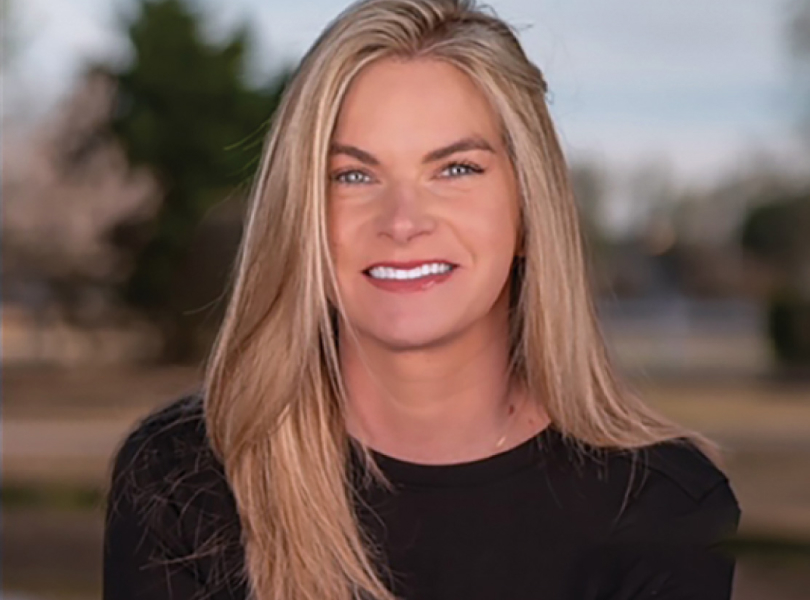
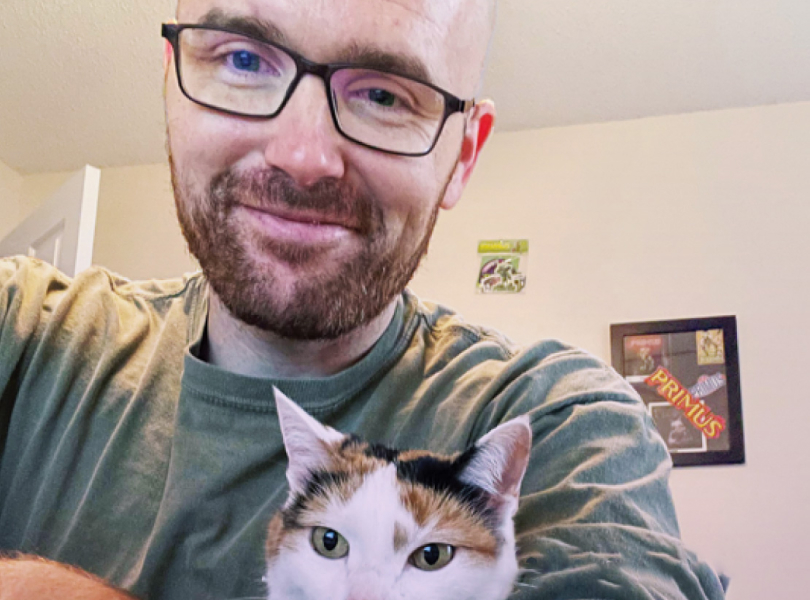
Talking about intimacy can be difficult, even with your partner. It’s nuanced. It’s often avoided. But it’s still very important. In this episode, Nora and guest Tom Picerno explore how he’s navigated these delicate conversations while living with Chronic Migraine. They’re joined by Tom’s wife, Cheryl, who adds an extra layer of perspective to how they’ve relied heavily on open communication, reframing what intimacy means to them while respecting each other’s boundaries.
Please see Important Safety Information, including Boxed Warning, within this episode and .
Nora McInerny:
Life sometimes has a way of blindsiding you with a feeling of being overwhelmed at the worst possible time. That's why you have your self-care, your coping strategies. That's why you have us.
I'm Nora McInerny and this is The Head Start: Embracing the Journey, a podcast where we'll be taking all those things you usually save for your friend group out into the open so we can all find a bit of optimism.
For those battling Chronic Migraine, these conversations are going to be even more helpful and relatable, so definitely stick around.
This show is brought to you in partnership with AbbVie. So first, let's hear some important safety information and stay tuned to the end of the podcast for more.
Speaker 1:
Indication: BOTOX® (onabotulinumtoxinA) is a prescription medicine that is injected into muscles and used to prevent headaches in adults with Chronic Migraine who have 15 or more days each month with headache lasting 4 or more hours each day in people 18 years and older.
It is not known whether BOTOX is safe and effective to prevent headaches in patients with migraine who have 14 or fewer headache days each month (episodic migraine).
Important Safety Information: BOTOX may cause serious side effects that can be life threatening. Get medical help right away if you have any of these problems any time (hours to weeks) after injection of BOTOX:
- Problems swallowing, speaking, or breathing, due to weakening of associated muscles, can be severe and result in loss of life. You are at the highest risk if these problems are preexisting before injection. Swallowing problems may last for several months.
- Spread of toxin effects. The effect of botulinum toxin may affect areas away from the injection site and cause serious symptoms, including loss of strength and all-over muscle weakness; double vision; blurred vision; drooping eyelids; hoarseness or change or loss of voice; trouble saying words clearly; loss of bladder control; trouble breathing; and trouble swallowing.
Please stay tuned for additional Important Safety Information within this podcast.
Today's guests, Tom Picerno is an actual BOTOX® patient who was on prescribed therapy when he shared his story. Changes in therapy status may have occurred since that time. Cheryl is not a BOTOX® patient. Tom and Cheryl were not compensated by AbbVie for sharing their story.
Nora McInerny:
I don't know if anyone has ever told you this before, but relationships can be hard work. It is of course the work that is worth doing. Showing up, communicating, learning and relearning your own needs and another person's needs and then doing it all over again. This is the work of intimacy, of letting yourself be seen and known and taking the time and effort to see and know another person.
It is rewarding and it is exhausting, even more so when you add Chronic Migraine into the equation because it can be hard to tend to another person when you are in the middle of a migraine attack, and it can be hard to let someone tend to you when you just want to be left alone in a dark room.
How can you experience intimacy when one or both partners are living with chronic illness? How do we meet the needs of the one we love when we can barely take care of our own? It can be hard to talk about this publicly, which means it's important to talk about it publicly and that's why I'm so grateful for today's guest, Tom Picerno. Tom is living with Chronic Migraine and his wife, Cheryl, experiences migraine attacks, and in the decades they've been together, they met when they were 14, they have learned to communicate, to adapt, and to redefine intimacy within their own boundaries and limitations. And in an act of true generosity, Tom has shared this hard-won knowledge with the migraine community, sharing his story and moderating conversations on migraine.com.
Before we meet Tom, a quick check-in with Dr. Rhyne.
Dr. Rhyne, it's so good to see you again.
Dr. Rhyne:
Hey, Nora. So cool to be back with you again.
Nora McInerny:
So, we have some very nuanced, and dare I say, personal conversations to have today. We have explored many different parts of the experience of living with Chronic Migraine, but we have never explored how it can affect intimacy. How often does this part of life and a patient's experience come up in your office?
Dr. Rhyne:
This issue is brought up by nearly every adult patient in conversation around their migraine attacks and their migraine triggers. The concern's often brought up while discussing the impact of the symptoms and the way that that could impact their intimacy, and so I'm really glad that we get a chance to explore that with this episode.
Nora McInerny:
Me too. Okay, let's meet today's guest, Tom Picerno.
Hi, Tom.
Tom Picerno:
Hey, Nora. It's great to be here.
Nora McInerny:
I'm so glad you're able to join us, and we can get to hear more of your story. But before we get into that, I want to ask you about music because I saw that you sometimes use music to help you cope with a migraine attack, which is actually really interesting to me because most of the people that we've spoken to have said that they actually prefer silence when they have a migraine attack. So I have to know what kind of music helps you during a migraine attack and is that different from the music you might enjoy at other times?
Tom Picerno:
I use the music that I normally listen to just every day. So sometimes I could use anything from classical music to more hard rocking type music.
Nora McInerny:
Hard rock. Oh, my god.
Tom Picerno:
Yeah, I have a few favorite tunes that are on my migraine playlist.
Nora McInerny:
That makes sense to me. So Tom, I want you to set the scene for us a little bit. Can you give our listeners an example what a migraine attack feels like for you?
Tom Picerno:
For me, I have Chronic Migraine. So usually when I'm getting a migraine attack, one of the key indicators for me is my aura. I usually start to see my field of vision like in a crescent and it starts to blur, and that blur moves across my field of vision, so that's when I know that I'm truly having a migraine attack. So I know that if I'm feeling discomfort at the same time as the aura, then I know that I'm in for a rough ride. And if I'm driving in a car, I immediately know I need to pull over and I just have to wait it out and see what happens. That's how it all starts for me, for the most part.
Nora McInerny:
Do you have a particular moment or a particular time when you felt that coming, like you can feel the migraine attack coming and you have to make an adjustment to what your life is going to look like that day?
Tom Picerno:
Definitely while I was still working I had to educate my team on what migraine was like for me so that they can understand when they notice that I'm not feeling like I'm not mentally engaged in what we're talking about, so I have to bring them all up to speed. But if I'm on my way to the workplace or something like that, one of my first things after pulling off the road if I'm driving is I need to notify someone where I'm going to let them know I was on my way, this is what's happening. If it gets worse, I will not be there. If it improves to the point that I can function, I will be there. So there's a lot of education just to make my life easier.
Nora McInerny:
And also I think that kind of communication makes everybody's life better, even the people who are around you and not experiencing a migraine attack, I do think most people want to be as good as possible for the people around us, right? Your colleagues want to know how you're feeling so they can jump into action, pick up slack if you can't because you would do the same for them, right?
Tom Picerno:
Absolutely.
Nora McInerny:
I am really appreciative of the work that you have done being so open in your writing about your experience living with Chronic Migraine and especially how that affects your relationship with your wife who also experiences migraine attacks because that is not easy to talk about.
We don't really talk about intimacy very much. You wrote that you have started to reframe what intimacy means, knowing that it is something that has to be flexible to your reality. Will you tell us about that? What does it mean to be intimate?
Tom Picerno:
For me, the little things now. If we get a chance to sit together on the couch and watch a movie, we'll hold hands. Just so that we have some kind of physical connection. When we sleep at night, quite often we'll just hold hands when we're lying in bed.
It's just like the things that a lot of people take for granted, those are the things that get reframed as our intimate times. We don't do the whole dating thing like other couples do a lot of times. It's, oh, we need to go to the store and get paper towels and toilet paper. Okay, that's a date. We're going to go and maybe we'll get an ice cream or something either going or coming back and that's it right there.
Nora McInerny:
Yeah,I really love that. I fully agree. There's also, of course, like the traditional definition of physical intimacy, which is for a lot of people something that is a very physical need or a desire. Is there anything that you have found that has worked in your marriage for how you both approach that part of your relationship knowing that Chronic Migraine can affect that at any moment?
Tom Picerno:
Yeah, I don't want to sound like cold about things, but we kind of plan things out. We know we're going to go away for this weekend and we're going to just do something that we both enjoy, go look at antiques or something like that, but we know that we're going to be by ourselves, so that opportunity to have that physical intimacy is definitely going to be there. Whether you know, my head, my body, and her head and her body will all sync up at that time, maybe it happens and maybe it doesn't, and it's like we're past the point where I don't really get upset about it anymore. She doesn't get upset about it anymore. It just is what it is. We just we really focus on trying to appreciate the time that we have together and something that's soothing for both of us is shower time. That's always been a time for us to be together and to relax, and we can decompress.
Nora McInerny:
I also think that there's something to like the scheduling aspect of it, I think you were getting to this point, even that can build up in anticipation more than just the, maybe it'll happen, maybe it won't. So I love that. I love that, and I love your relationship, which is why I am so glad that we get to bring your wife into this conversation.
Before we meet Tom's wife, Cheryl, I'm going to check in with Dr. Rhyne.
Okay, I want to bring you back into the conversation here, Dr. Rhyne. Tom has brought up some really good ideas around how we can reframe our definition of intimacy and be more intentional with scheduling time for intimacy with our partner with the goal of creating a partnership that can accommodate migraine attacks. But the current underneath all of this is around the stigmas that are faced by people living with Chronic Migraine and how they have to mask their experience to fit in.
So let's refresh people's memories a bit. What are some of the most common stigmas you hear about from your patients?
Dr. Rhyne:
Nora, the stigma that breaks my heart the most is that people don't trust the migraine patient. They think that they're faking it. They think that they're faking the intensity of the illness or the impact that the disability has on their everyday life.
Worse than that, patients are often made to feel like they're scapegoated, that their illness is there for personal gain or personal preference, as ridiculous as that sounds. Their coworkers make them feel like they're using Chronic Migraine diagnosis to avoid work or to work less. Their partners sometimes make them feel like they're using their diagnosis to avoid intimate encounters. Family members make them feel like they're using their diagnosis to avoid family responsibilities or even family interactions, which is the exact opposite of what these patients really feel and want.
What we end up then with is an impact that isolates people living with Chronic Migraine even further. It keeps them from developing open and honest communication around what they're experiencing.
Nora McInerny:
Yeah, I would imagine that seeing and feeling these stigmas every day would make you hesitant to be vulnerable and to share your story with other people and even with your doctor. Is this a factor in why you've seen people hesitate to seek care, and what other reasons have you seen that makes people hesitate a bit?
Dr. Rhyne:
Nora, this blows in my mind. A couple of years ago, a study came out that found that nearly half of people with migraine hesitate to seek care. It's a huge number and sadly not surprising.
In the study, they also tried to get a better picture of why those people hesitated. What they found that over a third of those people said that they hesitated because they were afraid their symptoms weren't going to be taken seriously, and it's sad to see.
For me in my practice, I mean they're internalizing all of the questioning that they've received their whole life about whether or not their disease is legitimate. Are they really having symptoms, are the symptoms that bad, and they're afraid that they're not going to have their needs met again when they finally do get the chance to see the physician. They're scared of the cynicism and disbelief. They're scared of the stigma that they've experienced already, and it's why I try so hard to save space for them when they do share their story at the very beginning of the relationship that we're building. Clinically it's really important for that treatment journey, but it's also really important for them to have that level of trust.
Nora McInerny:
All right, thanks Dr Rhyne, after the break, we’ll get back to the conversation and meet Tom's wife, Cheryl.
Nora McInerny:
It's time to bring Cheryl into the chat.
Cheryl Picerno:
Hi, Nora. It's great to be here. Thanks for having me.
Nora McInerny:
Cheryl, it's so good to meet you, and I am grateful that our audience gets to hear about this partnership that you two have and that you have built and that you have maintained, and that you have been able to navigate this experience and stay close to each other through all of this.
A lot of a relationship comes down to communication. How do you two communicate, check in with each other, and stay connected?
Cheryl Picerno:
So yes, the answer to your question, we just have to feel it out because he'll pretend he doesn't have a headache or he'll take medicine and say, "Oh, I'm fine." And I'll be like, "Are you sure? Because you're acting like I really don't want to be with you right now," and of course I understand that being uncomfortable makes those times difficult.
And then I was chuckling to myself because we went away for our anniversary last year and we thought we'd be together, and first day we're there, I'm like, "Honey, I am getting an aura," and I had a migraine attack for two days. And we're just like those times where we were just laying in bed together and I was listening to a movie and he was watching the movie and so it was flip sides, and we just worked through it.
So intimacy is more than a feeling. It's part of a being, who you are and that you're together.
Nora McInerny:
That's really beautiful, and I love that you just, you talked about the example of you're going away for your anniversary. Everyone thinks the anniversary trip is going to be the time. That's the most relatable thing. We're going away together. We're celebrating. You're getting a migraine attack. You're listening to a movie now. Like I, I don't think that there's anything more relatable than that, whether or not you experienced Chronic Migraine, like the expectations versus reality requires, it just requires a lot of flexibility. It requires that deeper intimacy that you are talking about, which is compassion for each other and compassion for yourselves.
I want to talk about how you've navigated those not-tonight moments because I think that's a hard thing. It's a hard thing for somebody to say at times. It's a hard thing for somebody to hear as well.
Cheryl Picerno:
It's really funny because my Chronic Migraine, I had four to five migraine attacks a week. Fortunately, Tom didn't have a migraine then. For me it'd be like, "I've taken care of all the kids today. I've vomited like four times today. I feel ugly. Like I don't want to do anything. And he, believe it or not, has, that isn't him all the time because he always wants me to be happy as well.
Nora McInerny:
Yeah.
Cheryl Picerno:
So now it's the flip side, and women are a little different than men. Men strive to be more intimate, and women are like, oh, okay, I can sleep tonight. So for us, like Tom said, we could sit on the couch and hold hands and just snuggle and, and that'll be okay. And he'll apologize to me, and I'm like, "There's no need to apologize. I loved just sitting there and watching the movie with you," or, "having you lay there and snore." Either way, I know that he's here, so I'm just grateful that I have him snoring next to me or with an ice pack or whatever.
Nora McInerny:
So, in a world where media often presents one version of intimacy above all others, this is a softer form of it. It’s one that respects that bodies don’t always do what we want them to do, and that love and connection can take many forms. Tom, I want to ask you, there's a lot culturally, there's a lot of pressure as a man to not, oh, don't experience any vulnerability and "weakness" in quotation marks, certainly don't talk about it if you, if you are experiencing it, and it's very toxic. It's very toxic to men. It's toxic to the people they love, and there's so much strength to be found, like inner strength, but also connection with other people in sharing those experiences openly. Can you talk to us about that?
Tom Picerno:
Yeah, I just, you just happen to get to the point where I was able to do that because you're working with a group of people, you're talking with your supervisor or something like that and they're used to you being very on top of things, very sharp, and one of my bosses used to tell me, "I didn't hire you for anything but the space between your ears." He says, "I want that three inches between your ears." That's great, but during a migraine attack, I'm not at my best at that point in time.
I just had to come to the realization that I could try and quote "man up" and try and cover it up and put on the little happy face or whatever and say, "Oh no, I'm fine. I've got this. I've got that." I'm also the kind of person where if I'm going to do something, I like to try and do it at the best level that I can, and I just knew that wasn't happening. I could just feel it in myself and say, "Yeah, I see that this project is done, but I could have done better, but I just don't know how I could have done better." So, it was like I have to start telling the people that work with me, telling the people that are above me, "I've been seeing a doctor about this, and this is how it has to be for me, and I'd like you guys to be on board with it." So, it's like it was very difficult.
I lived on FMLA, intermittent leave for three years at the end of my career. It was a tough conversation to have because I had to admit to myself that you're not who you were. That person is no longer viable in your life. So, I had to recreate myself and repurpose myself into something else, and that's when I found migraine.com, and I submitted some writing and they liked it, and they brought me on to do some content for them, and that really allowed me to kind of repurpose myself.
Now I can help another set of people by sharing my experience and just trying to be open, honest, and I guess vulnerable because it's one of those things that's if I'm suffering, then other people are suffering. But what I've learned with Chronic Migraine is that you can talk to 10 different people and they're going to have 10 different angles on how it impacts their life.
Nora McInerny:
Okay, Dr. Rhyne, how much do you love these two? They are like the shining stars of the migraine classroom.
Now, I always love hearing your thoughts on how people living with Chronic Migraine could approach doctors and their workplaces with this conversation, but we have never really talked about how they could approach their partners, their spouses, their boyfriends, their girlfriends. Do you have any numbers that help illustrate how hesitant people are to share their migraine experience and how do you try to help them navigate these conversations with their partners?
Dr. Rhyne:
Nora, this is I think the piece that helps these patients realize that they are not alone. So there are, and unfortunately the first one is really concerning. There was a large observational study that was done with almost 12,000 episodic and Chronic Migraine respondents. So a huge study that basically showed that the closer you are in a relationship to someone who experiences migraine attacks, the more stigmatizing your attitude is toward them. So the closer that you are, the worse that you're treating that individual that suffers with migraine.
Of the 12,000 people with both episodic and Chronic Migraine that were surveyed, 70% endorsed a stigma toward individuals living with migraine. So these people were asked who had a relationship with someone who had either episodic or Chronic Migraine, do you do stigmatizing things to that person? And 70% of them said yes. And this was more common in those respondents who had even closer relationships through a partnership or family relationship, a friendship to those that were living with migraine.
Clinically the way that we address this in my office, Nora, is that we put it all out in the open that they made an awesome choice in coming to seek care and we validate their experience. Finally, and really importantly after we have that sort of bridge to trust and understanding, look toward exploring treatment options with really specific goals in mind.
Nora McInerny:
All right, let's get back to Tom.
Tom, you said something earlier that I want to revisit, which is you had to disassemble who you thought you were and what your life was going to be like and rebuild that. I imagine that had to be pretty hard emotionally. How did that feel for you? And then Cheryl, I want to hear how that felt for you watching him go through that.
Tom Picerno:
For me, it was a very emotional thing for me because I had always been the provider. And I got to the point where I just, I couldn't do that anymore, at least not to the level that I thought that I could do, and it was a hard transition to make. But my wife was there to support me and we knew where things were going to be going and we planned the best way that we could to make a way for the future.
I made concessions to pull back out of my career and go on disability, and she made plans to step back up into the out-of-the-home workforce. I have to be real about it. I have to be honest and to set myself aside, and I try not to project the emotion that I'm feeling on the people around me and people in my family and things like that, but sometimes it's just how it is.
Cheryl Picerno:
So as I'm sitting and listening to all of this and I am thinking and thinking of my answer, I can recall when he first started getting his migraine attacks, he missed out on a daddy-daughter dance with his daughter, and we have pictures of someone who stepped in for him, and he felt really bad about it, but he just couldn't bring himself to do it. And that was the first time where I'm like, this has to be a debilitating feeling. He can't make himself go to a daddy-daughter dinner that's only two hours long, you know. So that's when you're like, maybe there is something a little more to this headache than it being just a headache.
It wasn't until about six years ago that I really started to realize that he really was struggling trying to keep his head on top of the cheese per se. And Christmas was coming, and we're pretty good financially with our money and spending it wisely and everything, but I went up to a local department store and I went in, I'll never forget it, I went in for my interview, and I just broke down tears. And the lady was like, and I'm like, Look, I'm not asking you to hire me because I'm crying," but I'm like, "My husband has Chronic Migraine, and I don't want you to hire me because my husband has Chronic Migraine. I may call out a couple of times because of that," but I'm like, I'm just trying to get back into the workforce." And they did hire me, which was amazing because I was bawling like a baby. But it wasn't until then that I realized that this is now who I am redefined as. I'm the person that's going to have to provide or whatever.
So we're walking into a different era, so that's one of the realizations that we have as well, and he understands that, and so that's a lot on my shoulders.
Nora McInerny:
Yeah, I think it's really beautiful for people to hear that any relationship can change and evolve. It's like you change, that changes the marriage, the marriage changes you, you change each other, like it's all just constant evolution. I think that's really valuable for people to hear.
Tom, I want to end by talking about the writing that you've done. What does it feel like to hear from people who have read your story and connected with it?
Tom Picerno:
It feels good, and I'm very grateful that they acknowledge that I've written something that resonates with them. It just, it gives me a good feeling. It reinforces the new purpose that I have that I can touch other people that are not even in my area and stuff like that. I think I've developed maybe the most meaningful connections with some of the people that are across the world. I've connected with someone from Germany. And what I wrote impacted him, and the comments that he wrote in response to what I had written resonated with me, so we traded information and-
Nora McInerny:
Yeah, you made him feel seen. He made you feel seen, and that's so powerful, and it's so valuable and so generous of you to do, Tom, and it was so generous of both of you to share so much of yourselves and your relationship with us and with our listeners. It is truly a gift, and I'm so grateful to you both for being here, so thank you.
Tom Picerno:
Thank you for having us.
Cheryl Picerno:
Thank you.
Nora McInerny:
Okay, Dr. Rhyne, Tom brought up something that's really important. The idea that men feel this pressure to not open up about their experience, that sharing all their symptoms or being vulnerable could be seen as being weak, and that it makes them hesitate. We've touched a bit on this before, but what do the numbers show us?
Dr. Rhyne:
Yeah I think, Nora, it's super important for us to keep this out in front because this really is one of the first hurdles that patients are going to experience is that hesitancy. So the prevalence of people with migraine is significantly higher in females than in males. Studies have shown that the ratio of female to male people with migraine is roughly three to one, meaning that for every male migraine patient out there, there are three female migraine patients.
The Global Burden of Disease study is a comprehensive research effort that has consistently highlighted migraine as a leading cause of disability worldwide, and that's where this data is coming from. Migraine attacks affect more than 1 billion people worldwide according to the study. Women even more so. So men with migraine generally have less severe migraine attacks, and unfortunately what that translates into is that they're less likely to seek treatment, and if they do seek treatment, they're less likely to receive a diagnosis versus women.
Nora McInerny:
So with all that in mind, are there unique challenges to men with Chronic Migraine finding care?
Dr. Rhyne:
Yeah, I look at the patients that I've treated in the past, there are several challenges. Let's take the perception and awareness, for example. Men might not recognize their symptoms as migraine attacks. They might underestimate the severity of their symptoms and then ultimately dismiss what they're experiencing as quote unquote "just a headache" to avoid that stigma and ultimately avoid the conversation altogether.
Nora, the bottom line is that men are less likely to talk to a doctor about their migraine attacks and about the symptoms that they're experiencing.
Nora McInerny:
Thank you, Dr. Rhyne.
Nora McInerny:
That was truly one of the most beautiful conversations that I've had. I am so grateful for Tom for sharing everything, for Cheryl for joining in, and for them laying out so much of their relationship, their marriage, their personal and shared experiences for all of us.
No two marriages are alike, just like Tom noted that no two migraine experiences are exactly alike, and I think it's so valuable to hear that reinventing yourself when you don't necessarily want to and reconfiguring your marriage, your relationship with each other, your relationship with yourself, this is necessary often, and it can be beautiful. It can be beautiful even if we didn't choose it.
So I hope you loved today's conversation. I know I did.
Thanks for listening to The Head Start: Embracing the Journey. We hope you found something worthwhile here with us today, a new coping strategy, a relatable story, the comfort of knowing you're not alone. I am so happy to be a part of creating this community for all of us, and especially for people living with Chronic Migraine.
If you haven't found a treatment plan that is working for you, please do reach out to your headache specialist to explore your options. I truly hope this has helped you find a bit of comfort and maybe a smile, maybe? See you next episode and stay tuned for more important safety information.
The Head Start: Embracing The Journey is hosted by myself, Nora McInerny, executive produced by Yvonne Sheehan. Our head of post-production is James Foster. Our researcher is Ciara Kaiser, and our writer is Jon Irwin. The show is mixed by Michael Hardman. Original music by SoundCat Productions and Artlist.