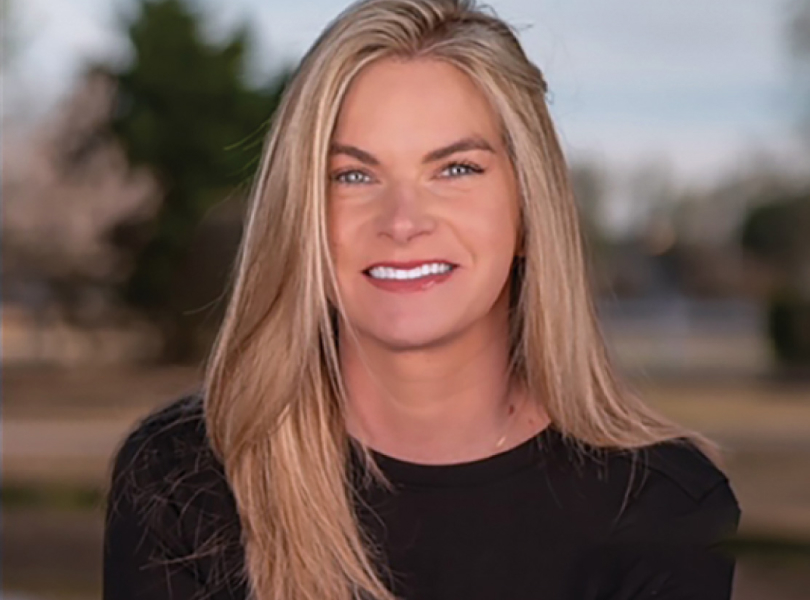
Season 3 - Episode 3
Strength Behind the Scenes: a Conversation With Lilly Singh
Living in the public eye brings constant pressure... Read More
Living in the public eye brings constant pressure, making it even more important for actress and host Lilly Singh to approach life with intentionality while managing her Chronic Migraine. In this episode, Nora sits down with Lilly to explore the daily routines, open communication, and wellbeing-first mindset that have helped her manage both personally and professionally. She shares strategies for setting boundaries, prioritizing wellness, and staying grounded—all tools that help her stay authentic while navigating a very public life.
Please see Important Safety Information, including Boxed Warning, within this episode and .
Nora McInerny:
Life sometimes has a way of blindsiding you with a feeling of being overwhelmed at the worst possible time. That's why you have your self-care, your coping strategies. That's why you have us.
I'm Nora McInerny and this is The Head Start: Embracing the Journey, a podcast where we'll be taking all those things you usually save for your friend group out into the open so we can all find a bit of optimism.
For those battling Chronic Migraine, these conversations are going to be even more helpful and relatable, so definitely stick around.
This show is brought to you in partnership with AbbVie. So first, let's hear some important safety information and stay tuned to the end of the podcast for more.
Speaker 1:
Indication: BOTOX® (onabotulinumtoxinA) is a prescription medicine that is injected into muscles and used to prevent headaches in adults with Chronic Migraine who have 15 or more days each month with headache lasting 4 or more hours each day in people 18 years and older.
It is not known whether BOTOX is safe and effective to prevent headaches in patients with migraine who have 14 or fewer headache days each month (episodic migraine).
Important Safety Information: BOTOX may cause serious side effects that can be life threatening. Get medical help right away if you have any of these problems any time (hours to weeks) after injection of BOTOX:
- Problems swallowing, speaking, or breathing, due to weakening of associated muscles, can be severe and result in loss of life. You are at the highest risk if these problems are preexisting before injection. Swallowing problems may last for several months.
- Spread of toxin effects. The effect of botulinum toxin may affect areas away from the injection site and cause serious symptoms, including loss of strength and all-over muscle weakness; double vision; blurred vision; drooping eyelids; hoarseness or change or loss of voice; trouble saying words clearly; loss of bladder control; trouble breathing; and trouble swallowing.
Please stay tuned for additional Important Safety Information within this podcast.
Today's guest, Lilly Singh is an actual BOTOX® patient who was on prescribed therapy when she shared her story. Changes in therapy status may have occurred since that time. Lilly was compensated for sharing her story.
Nora McInerny:
If there's one thing I've learned from hosting a podcast about Chronic Migraine, it's that Chronic Migraine does not care about your plans. It does not care about your deadlines or your agenda for the day. It doesn't care if you're on a movie set surrounded by Muppets, which might only be an example that today's guest can relate to.
Lilly Singh is the definition of doing it all. She's a comedian, and an actress, and an author, and a singer, and a YouTuber, and an activist. And honestly, I could keep going, but I think you get the idea. This is a woman with a lot on her shoulders and her resume.
She's living the dream and she is doing it with Chronic Migraine, which means that the dream can be a little less dreamy sometimes, like pushing through a migraine attack while filming because the roll calls for joy and goofiness in front of a camera, a crew, plenty of lights, even though the migraine attack calls for a nice dark room and an ice pack over her eyes.
Living with Chronic Migraine means that sometimes we have to keep showing up even when it feels nearly impossible.
That's one reason why I'm so excited to share this conversation with Lilly.
She's full of life and energy and joy, and she knows what it's like to have Chronic Migraine try to steal the show.
But before we meet Lilly, let's check in with Dr. Rhyne.
Let's welcome back our buddy Dr. Christopher Rhyne, who I'm seeing in real life for the first time.
Dr. Christopher Rhyne:
Yeah, Nora. Hi.
Nora McInerny:
It's so cool you're not on a screen.
Dr. Christopher Rhyne:
Wonderful to meet you and see you at the same time, right? I think Lilly is a great guest to have for this first because her story is one that I think leans into the core notion of what The Head Start is, and that's to go get help. And I think she does a really good job of expressing where she was, how she worked through that, and then certainly how she's come out on the other end, and still living her life in the presence of Chronic Migraine, but still living her life. And that's really, that’s really the goal. That's what we want.
Nora McInerny:
Lilly, welcome to the show. Welcome to The Head Start: Embracing the Journey Season Three.
Lilly Singh:
I am pumped to be here. Thanks for having me.
Nora McInerny:
Lilly, you are a professional, funny person.
Lilly Singh:
Wow, thank you.
Nora McInerny:
But what makes you laugh? What has made you laugh lately?
Lilly Singh:
I mean, a wide range of things, to be honest. And this is going to reveal how unhinged I am possibly as a person. I have made my social algorithm such that I only get served funny dog videos now, and my feed is just full of hilarious dog videos. And nothing will make me laugh, cry more than just funny animal content.
Nora McInerny:
Yeah, I love that. Have you gotten into the videos where a hamster is given a small meal at like a picnic table?
Lilly Singh:
Absolutely, Nora. Absolutely. But what a time we live in where you could say that and I'd be like, "Uh, yes, I actually have the merch. I do. "
Nora McInerny:
So you are a person who entertains for a living, who brings other people joy, and there is this parallel between that kind of role, that performance role, and stories we've heard from so many people in the Chronic Migraine community, which is sometimes you just have to put on the mask and push through it.
Lilly Singh:
Totally.
Nora McInerny:
And sometimes it's harder than other times. Can you tell us about a time when a migraine attack hits and you just cannot mask it any longer?
Lilly Singh:
That's a great question because there's quite a few examples. Honestly, there's quite a few examples. I guess the one that comes to mind is a few years ago, I had the absolute joy of being on the show called The Muppets Mayhem, and it's exactly what you think. Most of my co-stars were Muppets. So every day I would go into work, and it was really cool because we'd be on these stages that were actually six feet in the air. So I'd be on a stage so that the puppeteer can put their hand up.
And all this to say it's a very intricate setting. It's very fun. Every day you get to play. You're talking to co-stars that are Muppets and it's lovely. But I do remember that there was one day, and I remember there was this big scene, and I had a migraine attack. And I remember I was so uncomfortable and I would try to mask.
And I'd be really used to masking it, but just this day it was just I could not do it. And the tough thing about being on a set, I mean, migraine attacks are difficult regardless of where you are, but being on a set makes it particularly hard because there's so many lights. There's so many sounds.
Nora McInerny:
Smells.
Lilly Singh:
Yes. And I'm in hair and makeup. So when you're in hair and makeup, I can't lie down. I can't put an ice pack directly on my skin. So I remember having an ice pack strategically kind of touching my head, and I vividly have this memory of everyone having fun and me just in the corner being like, I have so much discomfort.
And I think the thing that bothered me the most, as someone who's so passionate about quality and being prepared, when I watched the show back, I could tell in my performance exactly when I was having a migraine attack. I was like, I can see it. I can see it on my face, which kills me because I always want to do my best.
Nora McInerny:
And your best even in that circumstance is probably better than so many others. But it doesn't matter because you are judging yourself.
Lilly Singh:
But it's also difficult because you know what? Who absolutely cannot relate to a migraine attack? A Muppet.
Nora McInerny:
A Muppet. A Muppet.
Lilly Singh:
A Muppet can't.
Nora McInerny:
They really are limited in their empathy in a lot of ways.
Lilly Singh:
Don't get me wrong, they have a lot of real emotions, but I'm not sure if they understand the discomfort of a migraine.
Nora McInerny:
No. But also what you're describing is so much pressure too, to be the number one human on the call sheet.
Lilly Singh:
Number one human, yeah.
Nora McInerny:
To be in most of the scenes, and then to also have something that you physically can't control come and interrupt something that you were getting into this. You're on a set. There's a lot of people.
Lilly Singh:
Right. And the only reason I brought up the complication and the uniqueness of the stage is because there's not much room for error because there is a possibility to fall off the set.
Nora McInerny:
Don't do that.
Lilly Singh:
Right? So when you have a migraine attack and you're already kind of like, I'm not 100, I had to be like, okay, but I can't fall off the set. I have to walk here. So there was just a lot to deal with.
Nora McInerny:
Yeah, it is a lot. How do you manage that without being completely overwhelmed?
Lilly Singh:
Well, most of the things in my life go through the filter of how can I prevent myself from having a migraine attack. One thing is I've gotten way better at communicating. I think for a while in my life I was very like, "No one's going to get this. Like there's no point in me talking about this." But I've gotten really good at being like, "Hey, just to let you know, I'm getting a migraine attack and this is probably how I'm going to react. And so it's not personal."
It's because I think people can take it a little personally because you become someone that's like, “you're breathing so loud. You're doing everything so loud right now. I need you to bring it down here.” And so I've gotten better at just communicating that, "Hey, I'm super sensitive right now." And and that's been really helpful.
Nora McInerny:
Was that hard for you to learn?
Lilly Singh:
It was because I think... I actually learned this from my mom. My mom travels with me. I lived with my parents for a long time, and my mom would describe... Sometimes she would say, "Lilly gets in a mood. Lilly gets in a mood every once in a while." And more often than not, that mood she's talking about is a migraine attack coming up.
Nora McInerny:
That's such a mom way to put it.
Lilly Singh:
Right. And it is when I'm a little like snappier and my patience is a little less and I'm a little short. And so especially with my mom, it’s..our relationship has really improved once I've just explained to her, "Like, this is what this feels like. This is the struggle. This is the discomfort. It's nothing to do with you. It's nothing to do with the setting. It's just this is what I'm going through." And now I feel like that's really helped because she can hold space for that.
Nora McInerny:
Yeah, it's not a mood, but it is affecting my mood.
Lilly Singh:
Correct.
Nora McInerny:
What are your triggers?
Lilly Singh:
I can always feel when I'm going to get a migraine attack, it's always going to start on my left side of my head and kind of coming up from behind my ear and my neck. I've gotten so used to like understanding, oh, my muscle feels a certain way and this is probably going to make my head start hurting. So I like literally here's the things. My night table has like a guasha, like a guasha. Game changer. I always have cold, a cold ice pack in this mini fridge that's literally by my bed.
Nora McInerny:
Brilliant.
Lilly Singh:
So that I don't have to go super far. I stretch. I have a regimented stretching routine every morning that I do.
Nora McInerny:
You have good posture too.
Lilly Singh:
Thank you. A lot of water, whatever I can do even, even because I get my hair and makeup done a lot, it's a full negotiation with my hairstylist about how high that ponytail is going also.
Nora McInerny:
And how tight.
Lilly Singh:
Exactly.
Nora McInerny:
Yeah.
Lilly Singh:
Correct.
Nora McInerny:
And now you can do that. But do you think you always could have?
Lilly Singh:
No, no, no, no, no, no.
Nora McInerny:
Or do you think when you're building your career, because that's such a touchy thing too is having a you know, very real, unpredictable physical limitation and balancing that with ambition and drive and wanting to do things.
Lilly Singh:
Absolutely. I actually didn't know I had Chronic Migraine for a really long time in my life. So when I started YouTube in 2010 and I started to build my career, I was just like, I get headaches a lot and I just have to deal with them. And I don't know how to deal with them. But now I do things that really help me manage. I'm in a place where my, my migraine attacks are much more manageable.
But previously when they weren't, it did take me a while to get to a place to be like, oh, I have to call my team and be like, "I need to reschedule this meeting." Because for years I would just be like, "I just got to do it. This is not a good enough reason. It’s how do I explain this?" But I'm very good now being like, "No, this is a real thing. I am so uncomfortable. I'm not going to be able to focus. This needs to be rescheduled."
Nora McInerny:
And that is self-care too.
Nora McInerny:
It’s not all bubble baths and salads.
Lilly Singh:
Absolutely. Holding space, holding grace.
Nora McInerny:
Yes.
Okay, Dr. Rhyne, we're going to switch things up a bit. We did this last season, but are you ready to play a game of MythBusters?
Dr. Christopher Rhyne:
I'm so ready, Nora. This was one of my favorite episodes we did last time. And so yeah, let's do it. Let's bust some myths.
Nora McInerny:
Myth number one, and look, it's hard for me to say this because I know better, but there are listeners who might not know better, migraine is just a headache.
Dr. Christopher Rhyne:
So that is very much not true. You're exactly right, Nora. It's absolutely a myth. Chronic Migraine is a neurological disease. Chronic Migraine is associated with more than just head pain. It's often associated with nausea. You've got the light sensitivity. You've got the sound sensitivity. Maybe even sensitive to odors.
There's difficulty in concentration, thinking clearly, even speaking sometimes. People living with Chronic Migraine can even have visual disturbances. They can have numbness. There's that language impairment risk. Rarely, in some cases, they can even have weakness associated with it. So it's an all-encompassing experience, and it's definitely not just a headache.
Nora McInerny:
All right, myth officially busted. And onto myth number two, caffeine is the cause of my migraine attack.
Dr. Christopher Rhyne:
So caffeine is unique. I really like that you asked this question. Too much caffeine can certainly trigger migraine attacks. But if we are regular caffeine consumers, unfortunately, stopping that caffeine can also trigger migraine attacks. So the moral to the story here is to remember that tea, soda, sports drinks, pre-workout drinks, some people forget that, and obviously coffee all can have caffeine.
And so we just want to watch labels and see what we're consuming. We want to look at the amounts of caffeine that are in each one of these drinks so we know exactly what we're taking into our bodies.
Nora McInerny:
Myth number three, there are no preventive treatments available for Chronic Migraine.
Dr. Christopher Rhyne:
We are on a roll, Nora. It's absolutely not true. So there are two main types of treatments that we've talked about throughout the podcast, and we've talked about acute treatments, which can effectively reduce the pain associated with the migraine attack, the other symptoms associated with the migraine attack, and the disability associated with the migraine attacks.
And there are preventative treatments that are built to keep the headache from showing up in the first place. A goal of that preventative therapy is to reduce the frequency and intensity of those migraine attacks. There may be preventative options available for you, so talk with your doctor about those options.
Nora McInerny:
You're three for three. Let's bring it up to myth number four, Chronic Migraine only affects women.
Dr. Christopher Rhyne:
Nora, it breaks my heart because I think sometimes people do feel like this is true, but let's bust this myth right now. That is absolutely incorrect. More than half a million men experience Chronic Migraine in the United States today. Technically, migraine attacks tend to present more in women, and so it is a problem that women deal with, but men do too. Here's the statistic. Migraine is three times more common in women than men, but migraine can affect people of all sexes and all genders.
Nora McInerny:
Okay, our final myth. Let's see if you can bust it. Here we go. I just have to get through a migraine attack alone.
Dr. Christopher Rhyne:
First of all, the myth is completely untrue, but I cannot tell you how much I hear this. And it is a tremendous bummer to have a patient come in the room and express this kind of energy that they're going to be alone. There are hundreds of doctors out there. There are thousands of advocates. There are millions of people living with migraine attacks who absolutely are here to help you through this.
So even if it's offering a simple, "Yeah, man, that stinks. Me too," that kind of energy, that kind of attitude around it, they definitely know what you're going through, and you're not doing it alone.
Nora McInerny:
Amazing job, Dr. Rhyne. Five out of five. 100%. Your trophy is in the mail. Now let's get back to our conversation with Lilly.
Speaker 2:
The BOTOX® Chronic Migraine branded mid-roll spot will play here.
Nora McInerny:
Lilly, you have this beautiful story where before you were diagnosed, you're on a bachelorette trip.
Lilly Singh:
Yes.
Nora McInerny:
And a bunch of women just jump in to like help diagnose you. And that is, that is being a girl's girl. So tell us that story.
Lilly Singh:
Yes. Oh my god, It's one of my favorite stories. Okay, so I'm just going to keep it 100. For many, many years, I was like, I just get headaches and I attributed it to anything. I was like, it's probably my hair is really long and heavy. It's probably because I haven't drank enough water. Maybe I didn't get enough sleep. There was always a reason. There was always a reason why I had a headache.
And then in 2022, I think it was, I was at a bachelorette party, and it was fabulous. It was my close friend's bachelorette party. It was like 10 girls. Now, my friend, she is a cardiologist. She's really smart. All of her friends were also doctors. So we were at this bachelorette party, and there was one evening where the sun was setting. We were in the water on a beach, and I felt a little tug happening on the left side of my head and on my neck. And I went up to one of her friends and I said, "Ah, I'm going to get a headache." And I said, "Can you take your elbow?" And she's like, "What are you talking about?" And I was like, "I just need you to like really, really apply pressure to this point." And she's like, "What's going on?"
And I was like, "Well, I just get headaches every once in a while." And then slowly they all start gathering around me, and we're in our bikinis in the middle of the water, and they're like, "Well, tell us what happens." I'm like, "Well, I get really sensitive to light, and sound really bothers me. And I feel nauseous, though I don't throw up, but I feel really nauseous. And sometimes it don't go away for a few days, and it's really debilitating."
And they're like, "I think that's a migraine attack." And I was like, "No, no, no, no, no, no, no, no, no." And the reason is growing up, I did have a friend that had migraine attacks, but hers looked very different. She would explain an aura light she would see. So I was like, well, that's what a migraine attack is, so this can't be it. And then my life changed when one of the girls at the bachelor party was like, "I think that, you're describing Chronic Migraine." So I went back to LA, I went back home, and I researched and I went for my consultation, and it has changed my life.
Nora McInerny:
And now you don't have to say to a woman you barely know at a bachelorette party, "Would you mind pulling out your elbow?"
Lilly Singh:
I don't even remember the last time I asked someone to stab my shoulder or my neck.
Nora McInerny:
So, Dr. Rhyne, I have a specific topic for this episode - Lilly brings up a really good point: Chronic Migraine has a bunch of varying symptoms. So people can see someone else living with Chronic Migraine with different symptoms from what they're experiencing , and then think they don't have Chronic Migraine. How do you talk to patients about their unique experiences and get them to realize what actually could be at play?
Dr. Rhyne:
Nora, it's the most important conversation in the room. I think one of the things that I try to share with patients right away is that their story is the thing that matters the most. It's not what Dr. Rhyne thinks we're going to do next. It's not the medication education. All those things are really critical, but the single most important thing is that individual experience. So that's where you start. You got to get to know the person sitting across the table from you. You can't do a cookie-cutter one-size-fits-all approach.
And then on top of just identifying their symptoms, you're right that Chronic Migraine looks different for everyone. You may not have the same symptoms as your friend living with Chronic Migraine. That's why it's really important to track your symptoms and be open to talking to your doctor about them - whether you think they’re minimal or not.
Nora McInerny:
So a common thread with people who have Chronic Migraine or experience migraine attacks is missing out, like being pulled out of their lives. Do you have moments like that that you think of when you think of Chronic Migraine, like things that you missed out on that you wish you wouldn't have or you know, yeah just life moments?
Lilly Singh:
Totally. Totally. Again, I could pull up my scroll. I probably have a bunch. But one that comes to mind, not to be the person that's obsessed with her mom, but I am. I love you, mom. I love you so much. You're my queen. I take an annual trip to India every year because I support some schools that are on the ground there. And so my whole team goes, and my mother comes with me every year. And this is a really exciting trip. We get to go all across India.
My mom doesn't get to go back often. It's a really, really special trip. And because of just the flight, the travel, everything, prime for me landing with a migraine attack. We were in the airport, really exciting trip. We were leaving I think Bombay heading to Delhi. And I was like, the discomfort is kicking in. And my whole team, we were in the lounge, and they were having fun, and I was a little snappy at my mom. And it bothered me.
She got like, I could see that she got a little like, "Oh, this is supposed to be a nice, lovely trip, and Lilly's a little snappy with me." And of course, I explained to her and she understood it. But when I tell you it bothered me for like a full month after, I kid you not that I had to journal about it because I was like this once a year trip, there's a special moment that we were so excited to travel. I could not fully just be in that space. It was just her face. It really bothered me. My queen, I'm sorry. I love you so much.
Nora McInerny:
Yeah, I get it. And also it's like, yeah, that is the perfect recipe too, like long travel day, uncomfortable travel day. Change, like, you're changing climates, hemispheres, like.
Lilly Singh:
Yeah, and also listen, I'm all for holding space for each other and accommodating to people what I need, but there is something that I'm slightly uncomfortable with when... I don't love the idea of people I love having to so accommodate as often as they had to. And I'm happy now they don't have to. People love each other and they accommodate. But I'm like, I don't love that like I have to be like, "Be quiet. Turn this off." Do you know what I mean? I don't love that space.
Nora McInerny:
Yeah. I, I interviewed my sister, because we've never actually talked about your Chronic Migraine, and I wonder if we should do that for the first time in public on a podcast. But I mean, she said something really similar too, which is like, of course, your mom understands, right? Your mom has been there your entire life, right. She knows it's no longer just like Lilly's in a mood. She gets it. And also all the grace that you would give somebody else, it’s just, there is something hard about being like, but they're giving me so much. Even though if it was them, you'd be like, "Take it. It's okay."
We're going back to your work. You are so successful, but you bounced between all of these like different genres, which is so cool. Right, that is such a hard thing to do. And I don't know, all success in my limited experience being moderately successful, I do think like everything has some amount of sacrifice to it, right?
You're sacrificing your time or privacy. You're stretching yourself too thin. There is just like, you have to pay in some way. How do you make decisions on new projects? Like what are things you will and will not budge on or sacrifice? And how do you add Chronic Migraine into that equation too?
Lilly Singh:
Totally. Well, some of them have to do with Chronic Migraine and some of them don't. One is when you shoot, you shoot for a long time. Sometimes you shoot for 12, 14 hours a day. You're with these people for a long, long time. And I have learned that no amount of money or accolade is worth you going home to be like, "Oh, I really did not have fun." So, the people, the vibes are very, very important to me.
The schedule is also really important, and that kind of does align with Chronic Migraine. Because when I did, for example, The Late Night Show, I did 96 episodes in three months. I vividly remember having a lot of migraine attacks during that time because there's no way you can sleep the appropriate amount. There's no way you can have an exercise.
Nora McInerny:
Drink water.
Lilly Singh:
Exactly. Water. So the schedule, I'm all for putting in the work and putting in the hustle, but it has to be made in a way that brings out the best in everyone. Like I said, I have a very regimented stretching morning routine. I have to be able to do that before I do something.
Nora McInerny:
That's so smart. I love that.
Lilly Singh:
I have space to do that, and I have the time to do that. So that's a big part of my decision making as well. And because my team is really used to how to help me if I'm having a migraine attack, I need to make sure that there's access for the people who are on my side to be there in presence as well.
Nora McInerny:
Yeah. Yeah.
Lilly Singh:
Because my assistant, I love her. I would not survive without her. But I mean, for other people, even my mom, the people that just really know how to deal with those situations.
Nora McInerny:
You need those people too. You need the people who know you. But I think it's also so valuable that you know yourself and you know what you're not going to not do. So we like to close our episodes with our guests sharing a message for the Chronic Migraine community. Is there anything that you want to leave our listeners with? Any piece of encouragement or inspiration or a third thing even?
Lilly Singh:
Just being comfortable with making your needs clear and being open to receiving people meeting your needs just like you would help meet their needs is really, really important. And the second thing I'll just say honestly is something that has really changed my life is having a structured morning routine. And if you don't have one, don't convince yourself you need to have a two-hour morning routine.
Mine is very simple. I journal, I stretch, I drink tea, and it has truly changed my life. My body feels so much better with my regimented stretching. My mind feels so much better because of my journaling. So just whatever a small routine works for you, really commit to it.
Nora McInerny:
I think that's smart. That's beautiful, and no one said that.
Lilly Singh:
Oh, really?
Well, you've been an absolute joy.
Nora McInerny:
Well, Lilly Singh, thank you for joining us today. You've been both a joy and exceptionally funny, so thank you.
Nora McInerny:
All right, Dr. Rhyne, knowing it can take so long for people to receive a diagnosis for Chronic Migraine and the importance of finding a headache specialist, what are some of the things to keep in mind to help people describe their experience to their doctor so their doctor better understands their headaches and their migraine attacks? Could you maybe make it into a list for people to check off easily?
Dr. Christopher Rhyne:
Nora, I love this question so much. It's really important that we get this right. So, once we finally go and sit down with the provider, it's important that we've prepared for that discussion. And don't leave out any details. First, you want to be really explicit about everything that you're experiencing. There can be a lot of stigma and insecurity around discussing whether or not you're nauseous, the light's bothering me, that there are foods that you can't tolerate.
There are things that you can't do or things that are impacting relationships. It's important that you bring all of that up. We want to be really clear. We don't want to minimize any of those experiences. Second, we want to be really specific about the number of days, particularly in a month that you're experiencing symptoms of any kind. It's even better if you could keep a really specific headache diary to share with that provider when you show up. That would be the very best thing that you can do.
We want to let our doctor or our APP know if we're experiencing light or sound sensitivity with those headaches. We want to pay attention to things like nausea, like we've talked about already, even if that's not vomiting. One of my favorite things about patients is I'll ask, "Are you nauseous?" And the first thing out of their mouth is, "I never throw up." But really what we're talking about here is nausea, not necessarily just vomiting.
Third, I would make sure to be very clear and extend a bit of trust to your doctor. It's okay to be a little bit more vulnerable. The key takeaway here is to simply be really, really crystal clear.
You know what's going on with your life. You know what's going on with your symptoms. We need to make sure that we really, really demonstrate that to the provider sitting across from you, and we recognize everything that migraine attacks are doing in your life. They need to hear it from you first so they can provide that diagnosis and then move forward with discussing treatment options.
Lastly, and I think this shouldn't be forgotten, we want to make sure that we mention medications that we're currently taking, that we've taken in the past, you know, even supplements, over-the-counter medicines, all of that counts. Things like that are really critical for your provider to hear about.
Nora McInerny:
Ah, Dr. Rhyne, thank you so much. You are the best. I always love when we get to talk and catch up, and I feel like I always learn something from you.
Thank you again to Lilly Singh, what a lovely person. There is so much that I love about the conversation that I got to have with Lilly Singh. But one thing that I hope you take away from this episode, is something I took away from this episode, which is that it is ok to advocate for yourself, it is ok to ask for what you need from the people around you and I also know that’s hard to do, that’s hard to do even if you aren’t, you know, starring in a TV show, or a movie, even if you don’t have, you know, hundreds of people counting on you, I know that everybody listening to this podcast has somebody who counts on them, has a whole lot of responsibility on your shoulders and nobody wants to be the person who’s dropping the ball or letting someone down but I truly believe that the people around us want to be as supportive as they can and they can’t do that without good information. So when you advocate for yourself, when you tell people your limits when you honor your own limits, you are also making space for the people around you to be able to acknowledge, and honor their own, and I think that is the kind of world that we all want to live in.
So thank you again to Lilly Singh, for bringing the laughs, for bringing the light, for bringing her wonderful amazing energy to this conversation. It is always an honor to make these episodes, it is always an honor to be adjacent to the Chronic Migraine community. You are all incredible people doing incredible things in this world, and I hope you feel especially after today's episode.
Next week is our final episode, I’m Nora McInerny, this is The Head Start: Embracing the Journey. I truly hope this has helped you find a bit of comfort and maybe a smile, maybe? See you next episode and stay tuned for more important safety information.
The Head Start: Embracing the Journey is hosted by myself, Nora McInerny, executive produced by Yvonne Sheehan. Our head of post-production is James Foster. Our researcher is Ciara Kaiser, and our writer is Jon Irwin. The show is mixed by Michael Hardman. Original music by SoundCat Productions and Artlist.